
A winter car emergency kit can make a big difference when cold weather turns a routine drive into an unexpected roadside emergency. A dead battery, flat tire, mechanical problem, or sudden winter storm may leave you sitting in your vehicle much longer than expected.
A well-planned winter car emergency kit can help you stay safer and more comfortable while you wait for help or deal with a roadside problem.
You don’t need to pack your entire house into the trunk. Start with practical supplies that address the biggest winter concerns: staying warm, being visible, communicating, and handling minor emergencies.
If your vehicle stops running in cold weather, the heater may not be available for long.
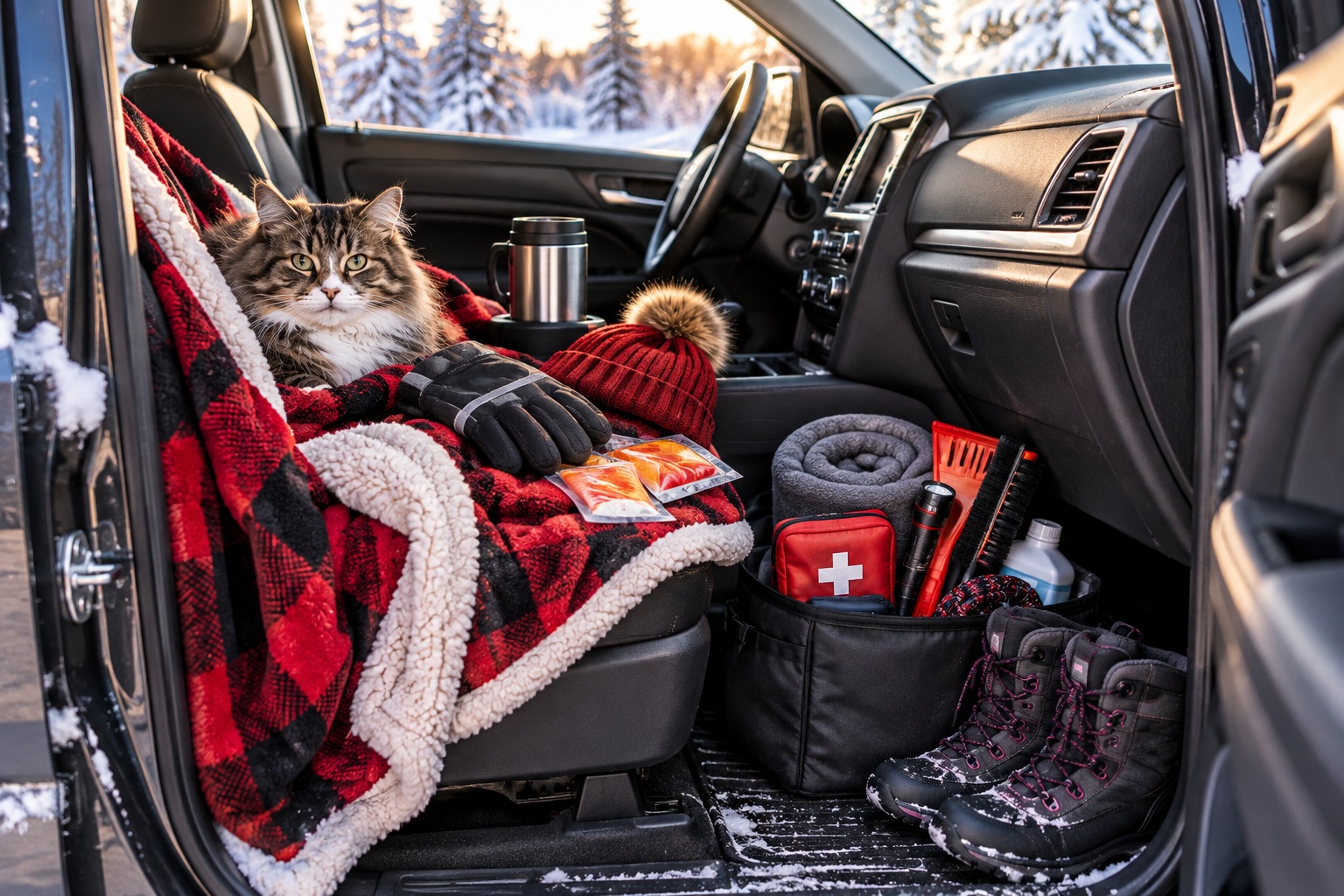
Keep extra emergency warmth supplies in your vehicle during the colder months. Useful items may include:
Choose items that can remain in the vehicle throughout the season so you aren’t depending on remembering to pack them every time you leave home.
Winter means shorter days, and roadside problems have an unfortunate habit of happening after dark.
Keep a dependable flashlight in the vehicle where you can reach it easily. A headlamp can also be useful because it leaves both hands free.
Store extra batteries if your lights require them, or make sure rechargeable lights are kept charged.
A lantern can provide broader light inside or around a stopped vehicle, but avoid creating glare that makes it harder for other drivers to see you.
Your winter vehicle supplies should include equipment for common roadside problems as well as weather emergencies.
Depending on your vehicle and driving conditions, consider carrying:
Check your spare tire periodically, too. Discovering that it’s flat when you need it isn’t much of a backup plan.
A basic first aid kit belongs in your vehicle year-round.
Bandages, gauze, antiseptic supplies, gloves, medical tape, and other basic items can help with minor injuries until additional assistance is available.
Because vehicles can become extremely hot in summer and very cold in winter, inspect your first aid supplies periodically. Replace products that have expired or been damaged by temperature extremes.
A charged phone can be one of your most important tools during a roadside emergency. A car charger gives you another way to keep a phone or other compatible device powered while you’re on the road. Keep the charging cable you need in the vehicle rather than relying on the one you normally use at home.
For longer trips, having more than one charging option can be useful. A vehicle charger can provide power while the vehicle is operating, while a portable power bank provides backup when you don’t want to depend on the vehicle.
Keep a vehicle charging cable available, and consider carrying a charged portable power bank as another option. Check the power bank periodically so you don’t discover that it’s empty when you actually need it.
If you’re traveling through an area with unreliable cell service, let someone know your route and expected arrival time before you leave.
Getting stranded for several hours is unpleasant enough without being hungry or thirsty.
Keep a small supply of shelf-stable food in your vehicle. Choose items that tolerate temperature changes reasonably well and don’t require cooking.
Water is important too, although freezing temperatures create an obvious complication. Rather than forgetting about water entirely, consider bringing fresh drinking water with you on longer winter trips.
Check any food stored in the vehicle periodically and replace it when necessary.
Visibility equipment is an important part of a winter car emergency kit, especially during snow, darkness, or poor weather.
Reflective warning devices, emergency lights, or a brightly colored safety vest can help make a disabled vehicle—and the people around it—more noticeable.
Whenever possible, stay well away from moving traffic. If conditions are dangerous, remaining inside the vehicle with your seat belt fastened may be safer than standing near the roadway.
Preparation starts before you turn the key.
Check weather and road conditions before traveling during questionable winter weather. If a significant storm is expected, changing your departure time or route may be the safest choice.
Keep your gas tank adequately filled, particularly during very cold weather or longer trips.
And remember that winter conditions can change quickly. A clear road at the beginning of a trip doesn’t guarantee the same conditions an hour later.
For more cold-weather driving guidance, review the winter driving tips from NHTSA before winter travel.
A winter car kit shouldn’t disappear into the trunk and be forgotten for five years.
At the beginning of cold-weather season, check the batteries, flashlight, first aid supplies, food, power bank, blankets, and other equipment.
Replace anything that’s missing, damaged, discharged, or expired.
Then put everything back in an organized bag, tote, or container so you can find what you need without unloading the entire trunk on the side of the road.
A little preparation can make an unexpected winter delay much easier to handle.
A little preparation today can make a big difference tomorrow.