
Winter storms can turn dangerous quickly. Snow, ice, bitter cold, and power outages can make everyday activities difficult and sometimes unsafe. A little winter emergency preparedness before the first storm can make a big difference.
You don’t need an enormous stockpile. A few practical supplies in your vehicle and home can help you stay warm, informed, and comfortable until conditions improve.
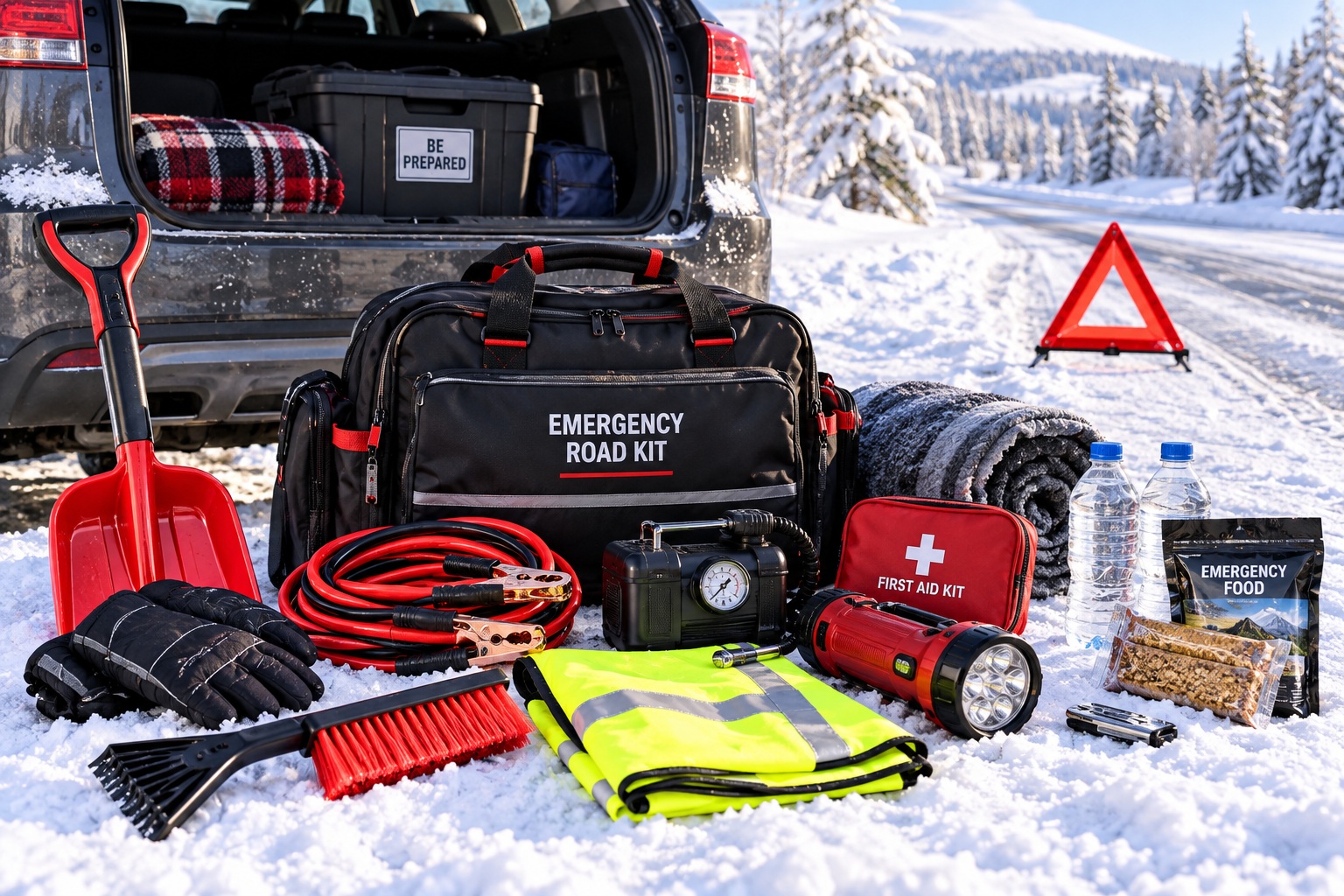
Even careful drivers can become stranded when roads turn icy or heavy snow reduces visibility. Keeping a basic emergency kit in your vehicle gives you supplies to rely on while waiting for help.
Consider keeping these essentials in your vehicle:
• Warm blanket or sleeping bags
• Gloves, hat, and extra socks
• Flashlights and extra batteries
• Portable phone charger or power bank
• Bottled water
• Shelf-stable snacks or food bars
• Basic first aid kit
• Ice scraper and snow brush
• Small shovel
• Jumper cables
During winter, it’s also smart to keep your gas tank at least half full whenever possible.
If severe weather leaves you stranded, staying with your vehicle is usually safer than walking for help. Your vehicle provides shelter and makes you easier for rescuers to locate.
If you run the engine for heat, first make sure snow isn’t blocking the exhaust pipe. Carbon monoxide can build up inside a vehicle when exhaust cannot escape. Crack a window slightly while the engine is running and use your hazard lights to help others see you.
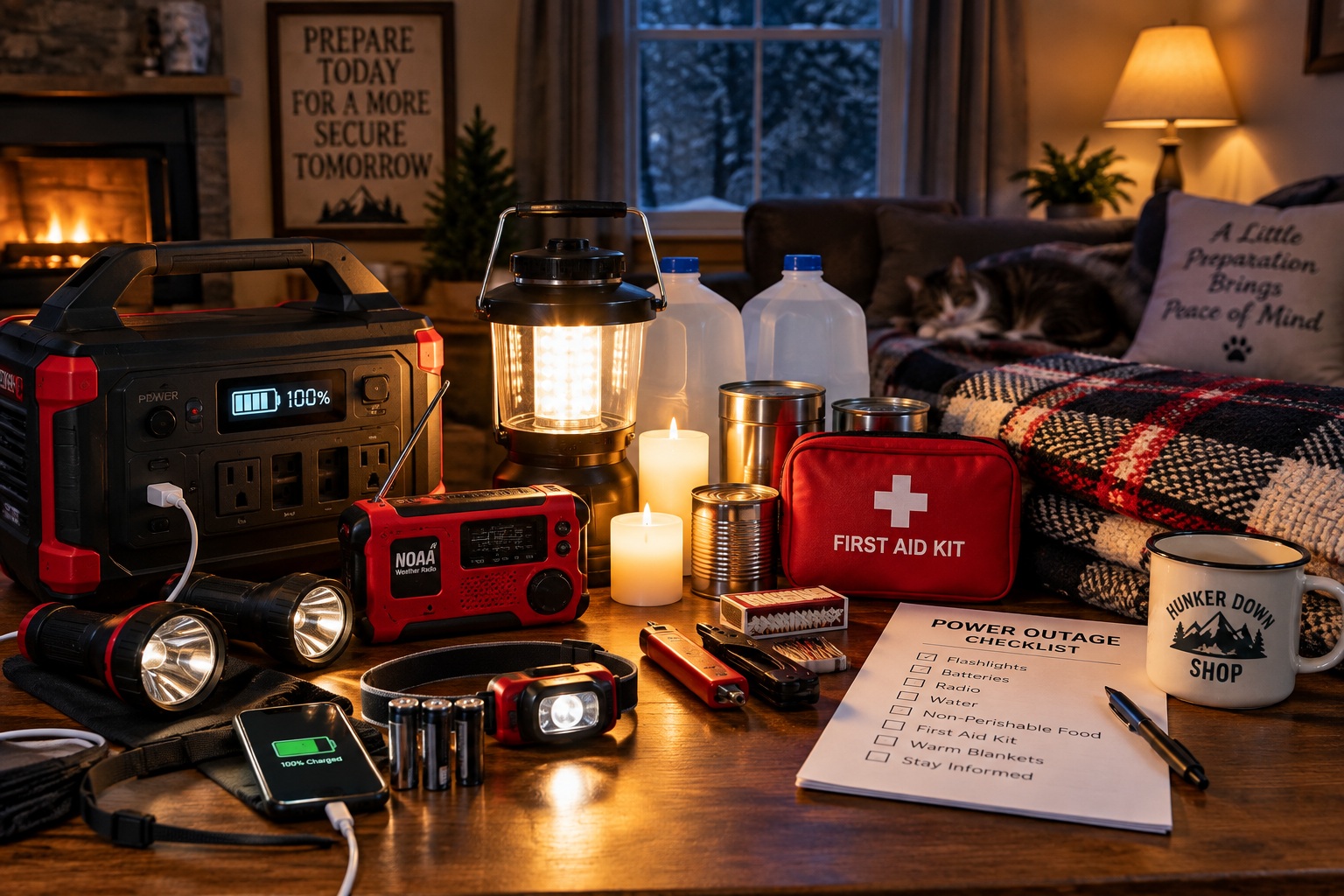
Winter storms can bring down power lines and leave homes without electricity or heat. Preparing beforehand means you won’t be searching for supplies after the lights go out.
A basic home emergency supply should include:
• Flashlights and extra batteries
• Battery-powered or hand-crank emergency radio
• Portable chargers or power banks
• Drinking water
• Shelf-stable emergency food
• Manual can opener
• First aid supplies
• Warm blankets or sleeping bags
An emergency radio can be especially useful during an outage because it allows you to receive weather alerts and local emergency information when television or internet service isn’t available.
If you use a generator, never operate it inside your home, basement, garage, or other enclosed area. Generator exhaust contains carbon monoxide, which can be deadly.
If the heat goes out, close off rooms you aren’t using and gather everyone in a smaller area of the house. Close curtains or blinds and place towels along drafty doors.
Dress in several loose layers rather than relying on one heavy layer. Blankets and sleeping bags can provide additional warmth.
Keep refrigerator and freezer doors closed as much as possible. This helps food remain cold longer during an outage.
The best time to prepare isn’t when everyone else is racing to the store before a storm.
Check flashlights and batteries periodically. Recharge your power banks. Restock food, water, and first aid supplies you’ve used. Before winter arrives, check your vehicle’s tires, battery, and emergency kit.
Most importantly, make sure everyone in your household knows where your emergency supplies are kept.
Winter weather is unpredictable, but being prepared doesn’t have to be complicated. A few supplies and a simple plan can make a power outage or roadside emergency much easier to handle.
Being prepared isn’t about fear — it’s about confidence.
Prepare early, stay informed, and stay warm.