
An emergency preparedness checklist can make an unexpected situation much easier to handle.
A powerful storm can knock out electricity. Winter weather can make roads unsafe. Flooding can interrupt water service, and even a short power outage can become stressful without basic supplies.
Fortunately, preparing your home does not have to be complicated or expensive. You do not need everything at once. Start with the basics and build your supplies over time.
This emergency preparedness checklist covers 29 essentials every home should consider for storms, power outages, evacuations, supply shortages, and other unexpected situations.
Preparedness is not about fear. It is about having a plan.
Emergency preparedness simply means planning ahead for times when normal services may be interrupted.
Power, clean water, stores, phones, and transportation are things we depend on every day. A storm, flood, winter weather event, or other emergency can temporarily disrupt any of them.
Having basic supplies at home can help you avoid last-minute trips to crowded stores and give your household more options when conditions are uncertain.
You do not need to build a complete emergency kit overnight. Start with essentials such as water, food, flashlights, batteries, and first aid supplies.
Then add other items as your budget and household needs allow.
Every household is different. As you work through the list, consider what you already own and what your family would need if you were without normal services for several days.
Remember to plan for children, pets, seniors, medications, medical equipment, and other special needs.
Build your emergency supplies a little at a time.
The goal is simple: Be ready before you need to be.
Food and clean water should be among your first preparedness priorities.
Keep foods that last, require little preparation, and are things your family will actually eat.
Good choices include canned meats, peanut butter, beans, canned fruits and vegetables, crackers, granola bars, and other shelf-stable foods.
Start with at least three days of emergency food per person. If space and budget allow, gradually build toward a longer supply.
Freeze-dried meals are lightweight, compact, and easy to store. Many require only hot water.
They work well for home emergencies, camping, vehicles, grab-and-go bags, and long-term food storage.
Always check individual product storage and preparation instructions.
Canned foods are an affordable way to build an emergency food supply.
Soups, beans, tuna, chicken, chili, fruits, and vegetables provide variety and often require little preparation.
Rotate stored food by using older items during regular meals and replacing them with newer ones.
Clean drinking water is one of your most important emergency supplies.
Plan for drinking, cooking, medications, basic hygiene, and pets.
A common starting guideline is one gallon of water per person per day for at least three days. Store more when possible, particularly for households with special medical needs or pets.
Larger food-grade water containers can supplement bottled water and help prepare for longer interruptions.
Choose containers designed for drinking water, follow the manufacturer’s storage instructions, label them with the date, and inspect them periodically.
Water storage options can be especially useful during storms and water-service interruptions.
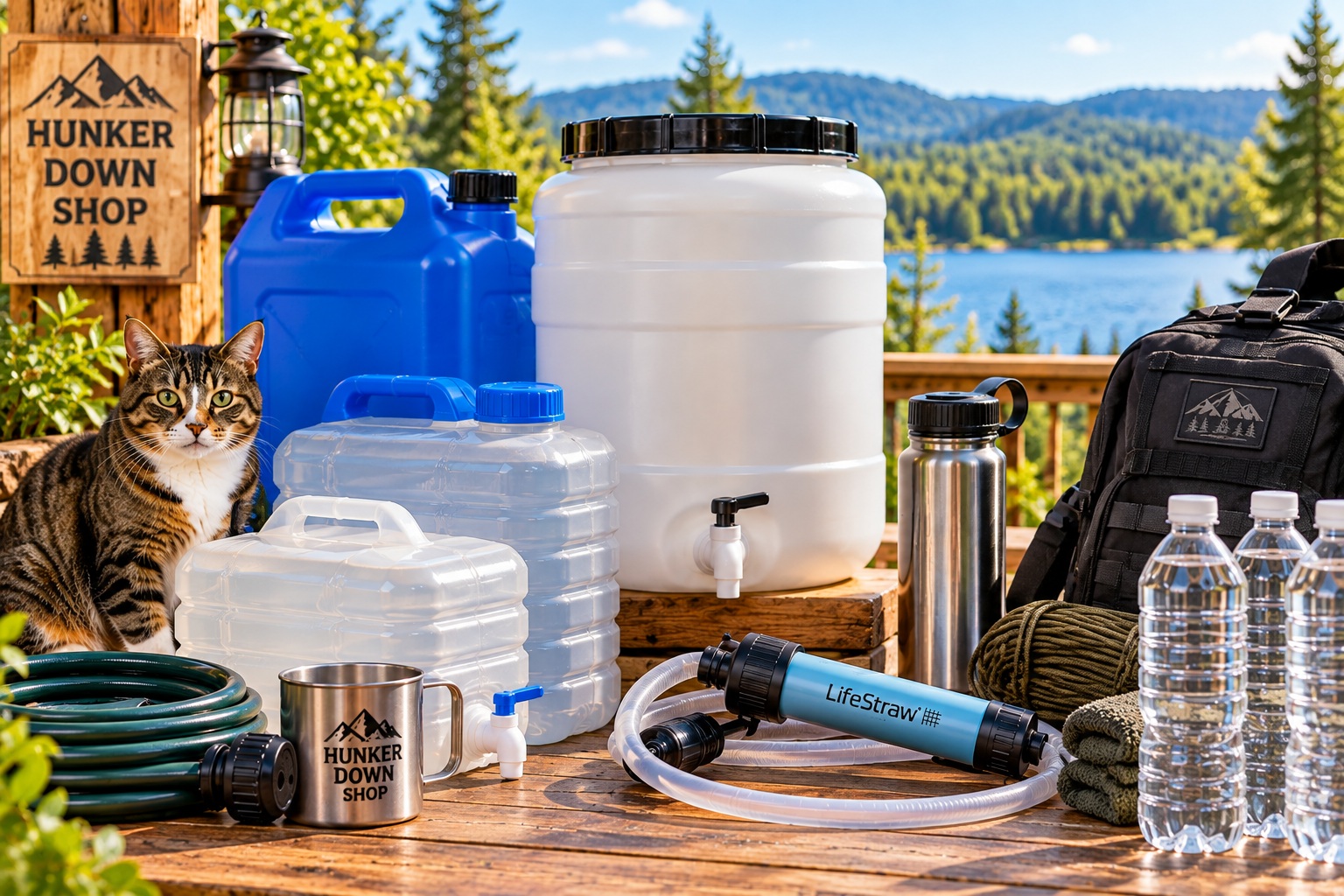
Stored water should be your first line of preparation, but a water filtration system provides an additional option if clean water becomes limited.
Portable filters can also be useful for camping, hiking, vehicles, and evacuation kits.
Choose a filter appropriate for the water source and contaminants you may encounter, and follow its instructions carefully.
Don’t stock canned food and forget the opener!
A manual can opener works without electricity and takes up very little space.
Keep one with your emergency food supplies so you know exactly where it is when the power goes out.
Reliable lighting and charging options can make a power outage safer and much easier to manage.
Keep several LED flashlights in easy-to-reach locations, such as bedrooms, the kitchen, garage, vehicle, and emergency supply area.
Check them periodically so they are ready when needed.
While flashlights are good for moving around, LED lanterns provide hands-free light for a larger area.
They are useful for preparing food, eating meals, reading, playing games, and lighting a room during an outage.
Keep extra batteries in the sizes required by your flashlights, lanterns, radios, and other emergency equipment.
Check stored batteries periodically and replace them when necessary.
A solar or hand-crank flashlight provides another lighting option when disposable batteries run low.
Some models also include radios, emergency alarms, or USB charging features, making them useful for emergency kits, vehicles, and camping.
During an outage, your phone may be your connection to weather alerts, emergency information, maps, and family members.
A portable power bank can keep it charged when household electricity is unavailable.
Keep your power bank charged and store the correct cable with it.
A portable power station provides more capacity than a phone power bank.
Depending on the model, it may operate phones, lights, tablets, internet equipment, small appliances, or certain medical devices.
Some models can also recharge from compatible solar panels.
A generator can provide valuable backup electricity during an extended outage.
Depending on its size and capacity, it may operate refrigerators, freezers, sump pumps, lights, chargers, or other essential equipment.
Generator safety is critical. Never operate a generator inside a home, garage, basement, or other enclosed area.
Generators produce carbon monoxide, which can be deadly. Operate them outdoors and away from doors, windows, and vents, and always follow the manufacturer’s safety instructions.
Never use charcoal grills, camp stoves, or other fuel-burning equipment indoors.
A few basic medical and safety items can help your household deal with minor injuries and other problems until normal services are available.
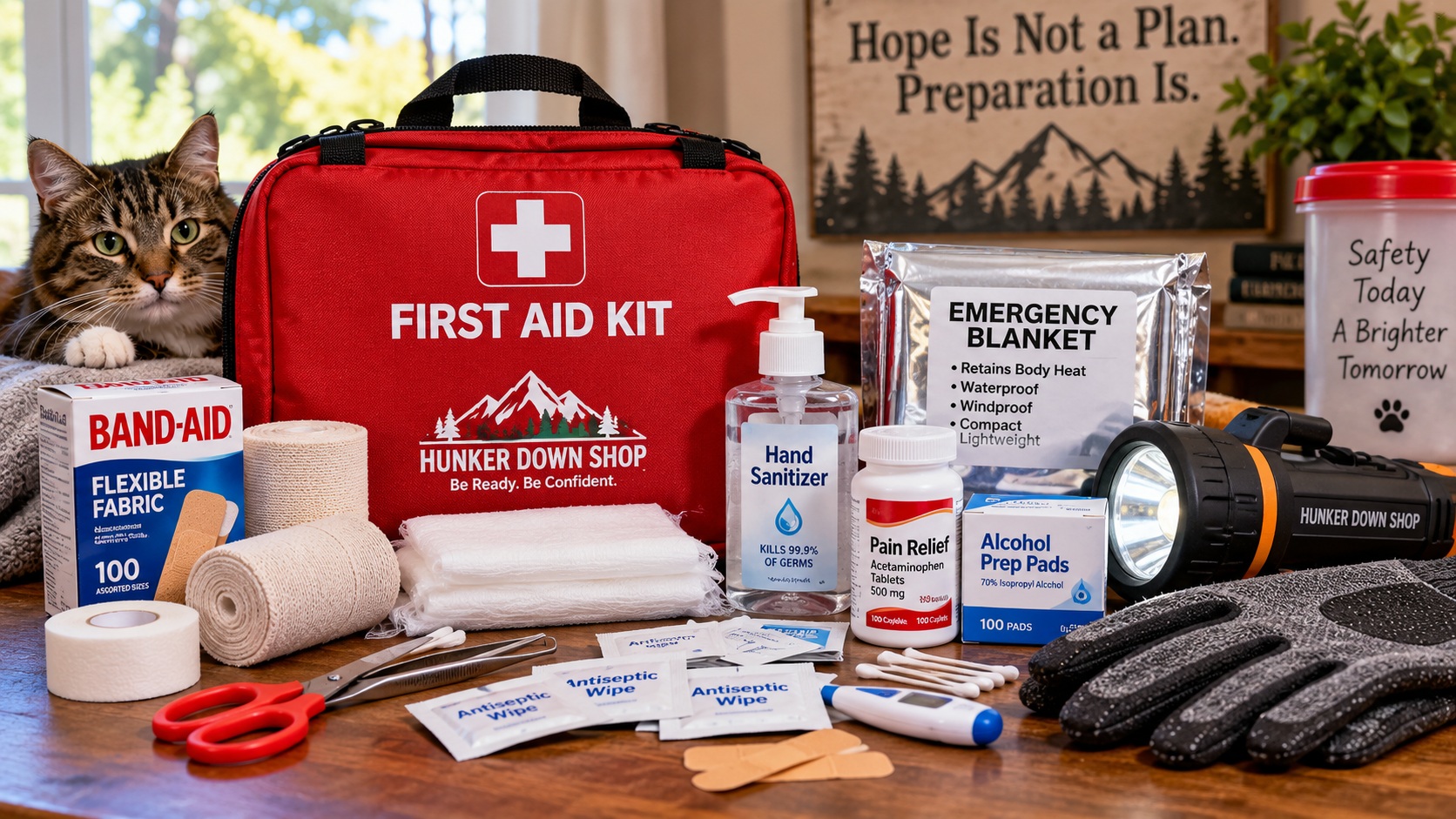
Every household should have a well-stocked first aid kit.
A basic kit may include:
Check your kit at least twice a year and replace expired or used items.
If someone in your household relies on daily medication or medical equipment, include those needs in your emergency plan.
When possible, work with your healthcare provider and pharmacy to maintain an appropriate supply.
Also consider extra eyeglasses, hearing-aid batteries, diabetes supplies, mobility items, and necessary medical-equipment accessories.
Keep an updated medication list and important health information where it can be found quickly.
Keep appropriate fire extinguishers in accessible locations and make sure household members know where they are.
Follow manufacturer recommendations for inspection, maintenance, replacement, and proper use.
Working smoke alarms provide critical early warning of a fire.
Install them in appropriate locations, test them regularly, and replace batteries and older units according to manufacturer recommendations.
Carbon monoxide cannot be seen or smelled, so working carbon monoxide alarms are essential protection.
They are particularly important in homes with fuel-burning appliances, fireplaces, wood stoves, propane equipment, or generators.
Test alarms regularly and follow manufacturer instructions for placement and replacement.
Supplies are only part of preparedness. Your household also needs reliable information and a plan for communicating.
Cell phones and internet service may be disrupted during severe weather.
A NOAA Weather Radio can provide important weather alerts and emergency information.
Many emergency radios also include useful features such as hand-crank or solar charging, flashlights, USB ports, and backup battery power.
Keep a printed list of important contacts in case a phone is lost, damaged, or out of power.
Include family members, doctors, veterinarians, insurance companies, utility providers, and other emergency contacts.
Make sure everyone knows where the list is stored.
Decide ahead of time what family members should do if you become separated.
Your plan should identify:
Keep the plan simple enough that everyone can remember it, and review it periodically.
Cold, wind, rain, or the loss of household heat can quickly become serious concerns.
Emergency blankets are compact, lightweight, and easy to store.
Keep them in home emergency kits, vehicles, backpacks, camping supplies, and grab-and-go bags.
Keep enough blankets and sleeping bags for household members if normal heating is interrupted.
Sleeping bags are also useful during evacuations, camping trips, temporary shelter stays, and vehicle emergencies.
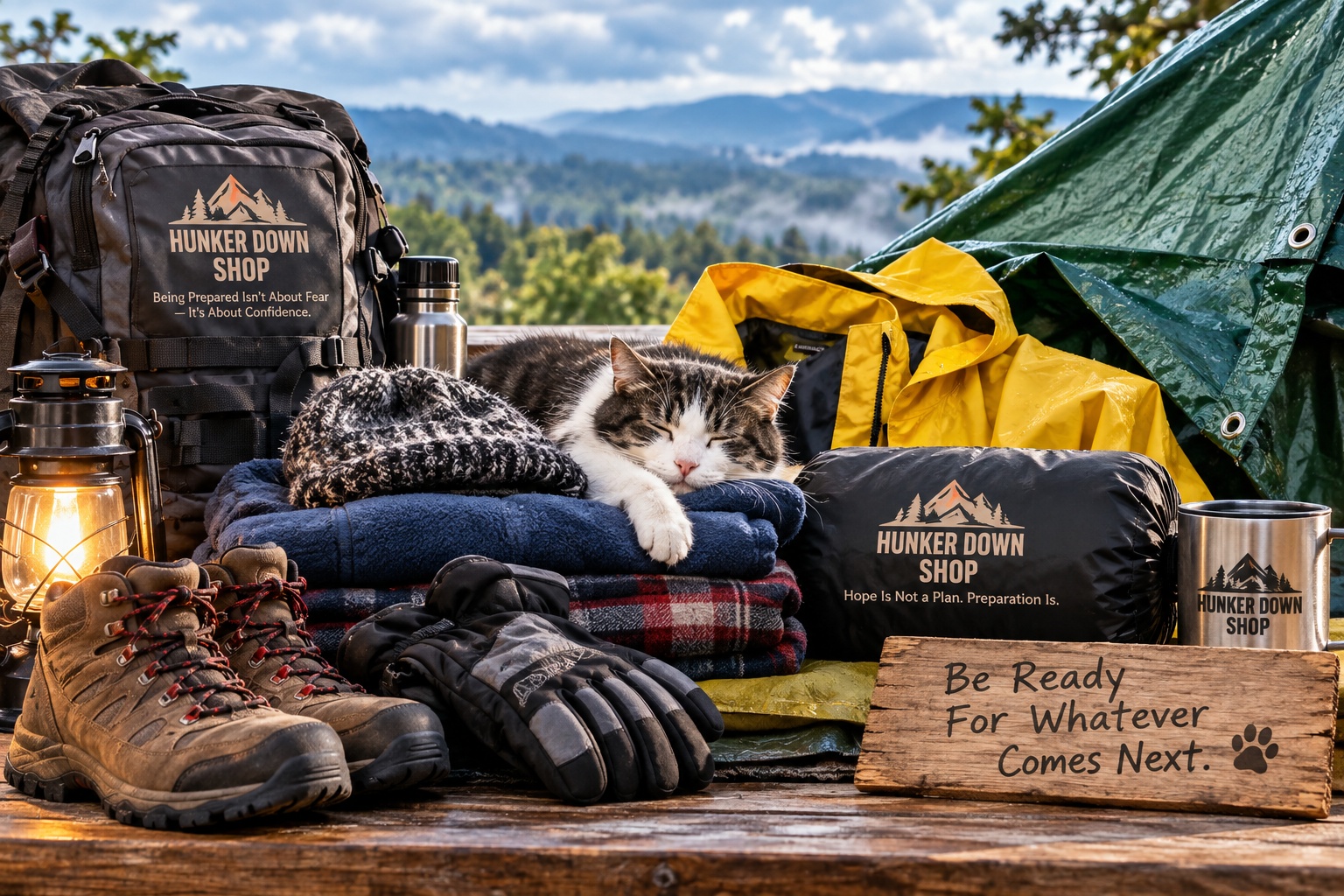
Store clothing appropriate for your climate, including warm socks, gloves, hats, jackets, sturdy shoes, and rain gear.
If you have growing children, check stored clothing sizes periodically.
Staying dry can be just as important as staying warm.
Preparedness also means protecting important information and planning for household members who may need additional help.
A multi-tool can handle small tasks such as opening packages, tightening screws, cutting materials, or making temporary repairs.
Also protect copies of important documents, including:
Keep paper copies protected from water and consider secure digital backups.
Pets need emergency supplies too.
A pet emergency kit should include several days of food and water, medications, bowls, leashes or collars, carriers, waste supplies, comfort items, vaccination records, and veterinarian contact information.
Check pet supplies regularly and replace food, medication, or other items as needed.
Older adults and people with medical or mobility needs may require additional planning.
Depending on the person, consider:
Build your emergency plan around the actual needs of the people in your household.
Some emergencies require you to leave home quickly.
A grab-and-go emergency bag keeps essential items together so you do not have to search for them during an evacuation.
Consider including:
Keep the bag somewhere easy to reach. Check it at least twice a year for expired supplies, medications, clothing sizes, and changing household needs.
Start with at least three days of food for each household member. Choose shelf-stable foods your family will eat and that require little preparation. If possible, gradually build toward a longer supply.
A common guideline is at least one gallon per person per day for three days. Remember to account for pets and household members with additional needs.
If you are starting from scratch, concentrate on water, food, flashlights, batteries, first aid supplies, a manual can opener, and a reliable source of emergency information.
Then build from there as your budget allows.
A good routine is twice a year.
Check food and medications for expiration dates, inspect batteries and other supplies, recharge electronics, and replace clothing that no longer fits. Update your emergency plan whenever your household’s needs change.
Not every household needs one.
A generator may be useful if you experience frequent or extended outages or rely on equipment that requires backup power.
If you use one, always follow the manufacturer’s instructions and never operate a generator indoors or in an enclosed space.
A home emergency kit contains supplies that help you remain at home when normal services are disrupted.
A grab-and-go bag contains essentials you can quickly take with you if you must evacuate.
Many households can benefit from having both.
Yes. Power outages, storms, water interruptions, and other emergencies can affect apartments as well as houses.
If storage space is limited, prioritize compact essentials such as food, water, a water filter, flashlights, emergency blankets, a power bank, medications, and first aid supplies.
Absolutely. Prepare pet emergency supplies including food, water, medications, carriers, leashes, waste supplies, vaccination records, and veterinarian information.
You do not need all 29 items today.
Start with the essentials you need most. Add another item when your budget allows, and periodically check what you already have.
Over time, those small steps can build a preparedness plan that fits your household.
At Hunker Down Shop, we believe preparedness should be simple, practical, and approachable. We offer emergency food, water supplies, first aid gear, backup power, communication equipment, and other products to help families prepare for the unexpected.
No one can know exactly when the next emergency will happen.
But you can be better prepared when it does.