
A 3-day power outage can happen with very little warning. Severe thunderstorms, high winds, ice, equipment failures, and other emergencies can leave a home without electricity for hours—or even several days.
Preparing for a three-day outage does not mean turning your home into a warehouse. A few carefully chosen supplies can make those 72 hours safer and considerably more comfortable.
Here is what to have ready before the lights go out.
When the power fails at night, good lighting becomes an immediate priority.
Keep flashlights in several easy-to-reach locations rather than storing all of them together. Bedrooms, the kitchen, and your main living area are good places to start.
Lanterns can provide broader illumination for a room, while flashlights are useful when you need to move around the house or go outside.
Keep extra batteries with your emergency supplies and check them periodically. Rechargeable lights can also be useful, provided you have a backup method for recharging them during a longer outage.
A power outage can also interrupt television, internet service, and other everyday sources of information.
A battery-powered or hand-crank emergency radio can help you receive weather alerts and local emergency information when other communication methods are unavailable.
A NOAA-capable weather radio is especially useful during severe weather because it can provide official warnings and updates.
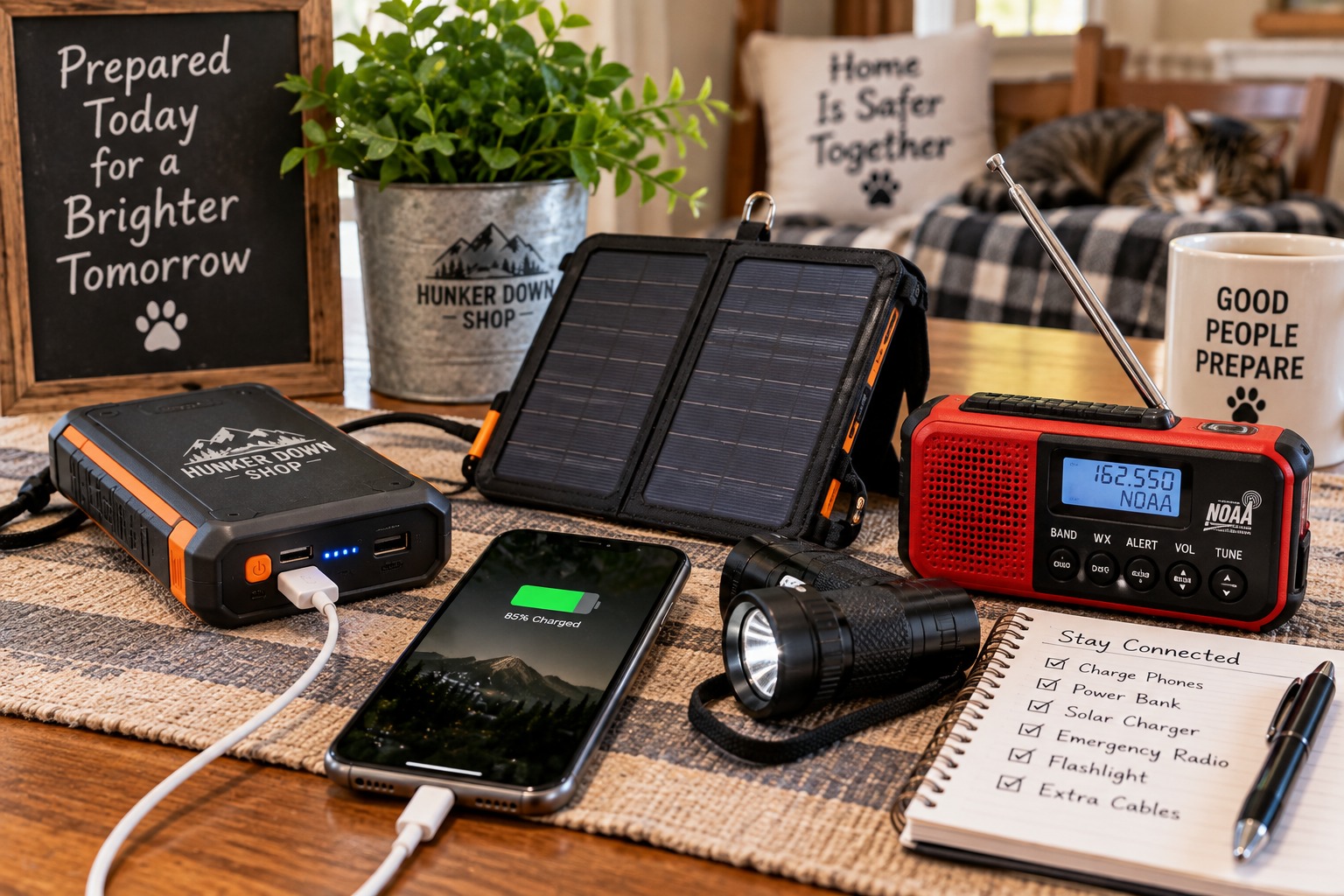
Phones are important during an emergency, but their batteries do not last forever.
Fully charged portable power banks can keep phones and other small USB devices operating when household outlets are unavailable.
For longer outages, solar charging equipment or other backup power options may provide additional flexibility.
Larger power needs require more planning. Power inverters, portable power equipment, and other backup systems have different capacities and limitations. Always follow the manufacturer’s instructions and make sure the equipment is appropriate for what you intend to power.
Do not assume that a power outage cannot affect your water supply.
Homes with electric well pumps can lose running water when the electricity goes out. Municipal systems can also experience problems during major emergencies.
A commonly recommended starting point is at least one gallon of water per person per day for several days, with additional water for pets and other needs.
For a three-day emergency, that means planning for at least three gallons per person just for basic drinking and sanitation needs.
Water filtration equipment can provide another option when stored drinking water is limited, but filters should be selected according to the type of water source and contaminants they are designed to address.
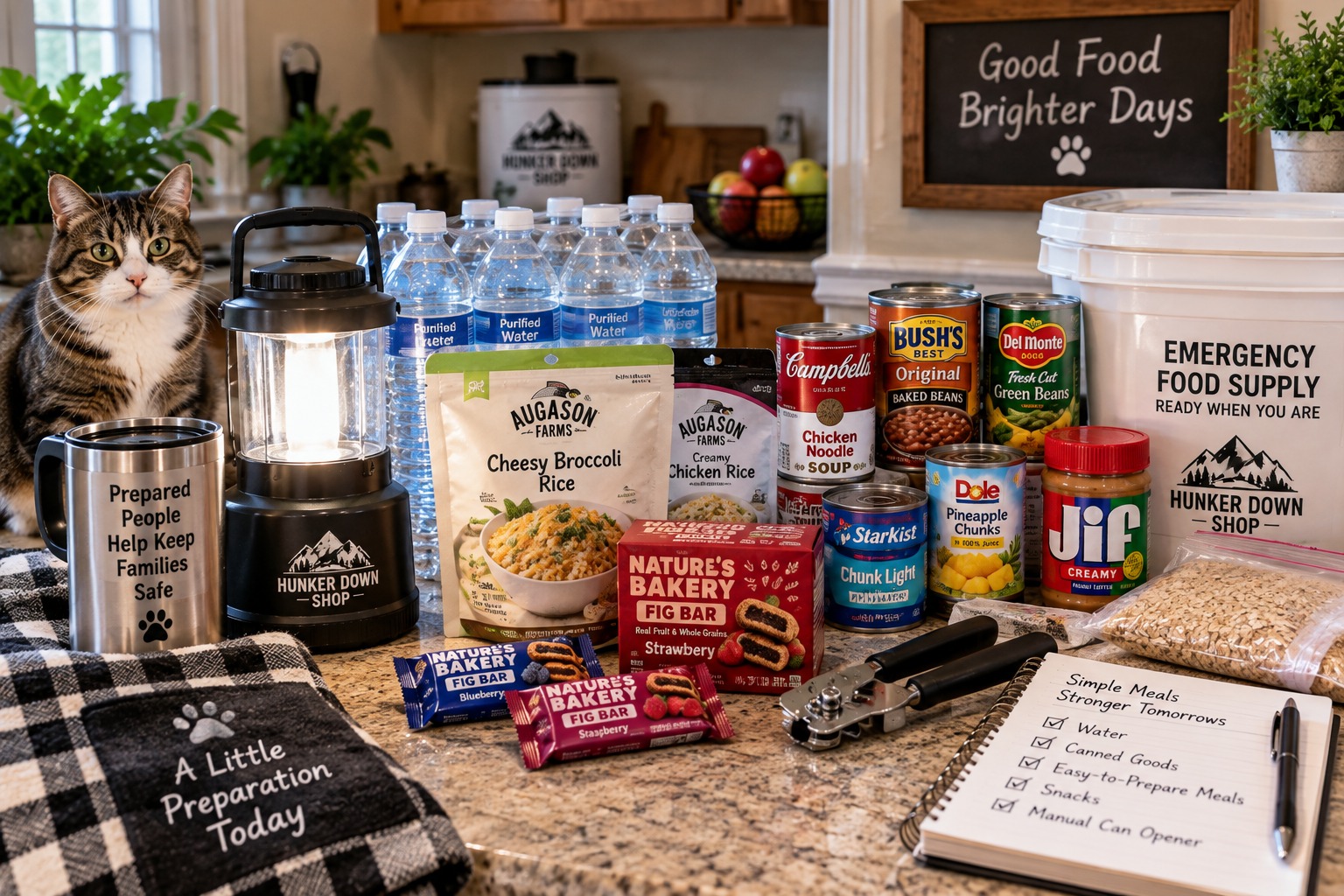
A three-day power outage is not the time to discover that every meal in the house requires an electric stove.
Keep shelf-stable foods that require little or no cooking. Emergency meals & meal kits, ready-to-eat foods, food bars, and other long-lasting options can make meal planning easier.
Remember to keep a manual can opener available if any of your emergency foods are canned.
During an outage, use refrigerated and frozen foods carefully. When in doubt about whether food has remained at a safe temperature, follow current food-safety guidance rather than relying on appearance or smell.
A power outage during extreme heat or cold can become more than an inconvenience.
During cold weather, keep blankets, warm clothing, sleeping bags, and other insulating supplies available. Close off unused rooms and concentrate your household in a smaller area when appropriate.
During hot weather, stay hydrated, reduce strenuous activity, and pay attention to heat-related warnings.
Never use outdoor grills, generators, camp stoves, or other fuel-burning equipment indoors or in enclosed spaces. Carbon monoxide can accumulate quickly and can be deadly.
Minor injuries become harder to manage when the house is dark and stores may be closed.
Your emergency supplies should include a well-stocked first aid kit along with any personal items your household regularly needs.
Keep important medications organized and pay particular attention to medicines that require refrigeration or electrically powered medical equipment. Those situations may require a separate backup-power or emergency plan.
Pets need emergency supplies too.
Set aside enough food and water for each animal, along with necessary medications, carriers, leashes, identification information, and basic cleanup supplies.
Keeping these items together can save valuable time if a power outage becomes part of a larger emergency that requires evacuation.
You do not necessarily need a separate container for every emergency. Many supplies can be part of your household’s regular preparedness kit.
For a 3-day power outage, concentrate on the basics: lighting, batteries, communication, backup charging, food, water, first aid, warmth, and necessary personal supplies.
Check the kit periodically and replace expired food, depleted batteries, outdated medications, or damaged equipment.
You cannot control when the electricity goes out, but you can control how prepared your household is when it happens.
Start with the essentials and build your supplies gradually. Even a modest amount of preparation can make three days without power much easier to manage.
At Hunker Down Shop, we believe being prepared isn’t about fear—it’s about confidence.