When the power goes out or severe weather disrupts normal services, food and water usually get most of the attention. However, emergency hygiene and sanitation can become just as important.
A prolonged outage may affect running water, toilets, sewer systems and garbage collection. Even a short disruption can make everyday tasks such as washing your hands, brushing your teeth or using the bathroom more difficult.
Preparing a few basic supplies ahead of time can help your household stay cleaner, more comfortable and healthier until normal services return.
Clean water and working plumbing are easy to take for granted. Turn a faucet, flush a toilet or start the washing machine, and everything normally works.
An emergency can change that quickly.
Flooding, power failures, frozen pipes, damaged water systems and other disasters may interrupt water or sewer service. When that happens, poor sanitation can increase the risk of illness.
Your emergency plan should include more than food, flashlights and batteries. Plan for hygiene and sanitation, too. Think about how your household would manage without running water or working toilets.
Emergency water planning often focuses on drinking water, but households also use water for cleaning and personal hygiene.
Store enough water for several days. A common guideline is at least one gallon per person each day. Keep extra water for pets and other household needs.
Your safest stored water should be reserved for drinking and food preparation. When appropriate, other available water may be useful for certain cleaning or sanitation purposes.
Keeping extra water on hand gives you more options when the faucet stops working.
Clean hands are one of the simplest ways to help prevent illness.
Wash your hands with soap and safe water for at least 20 seconds. Clean hands are especially important before preparing or eating food. Be sure to wash again after using the bathroom, handling trash or cleaning up after pets.
If soap and water are not available, use hand sanitizer when appropriate. Choose one that contains at least 60% alcohol.
Consider keeping soap, hand sanitizer, disposable towels and cleaning supplies together so they are easy to locate during an outage.
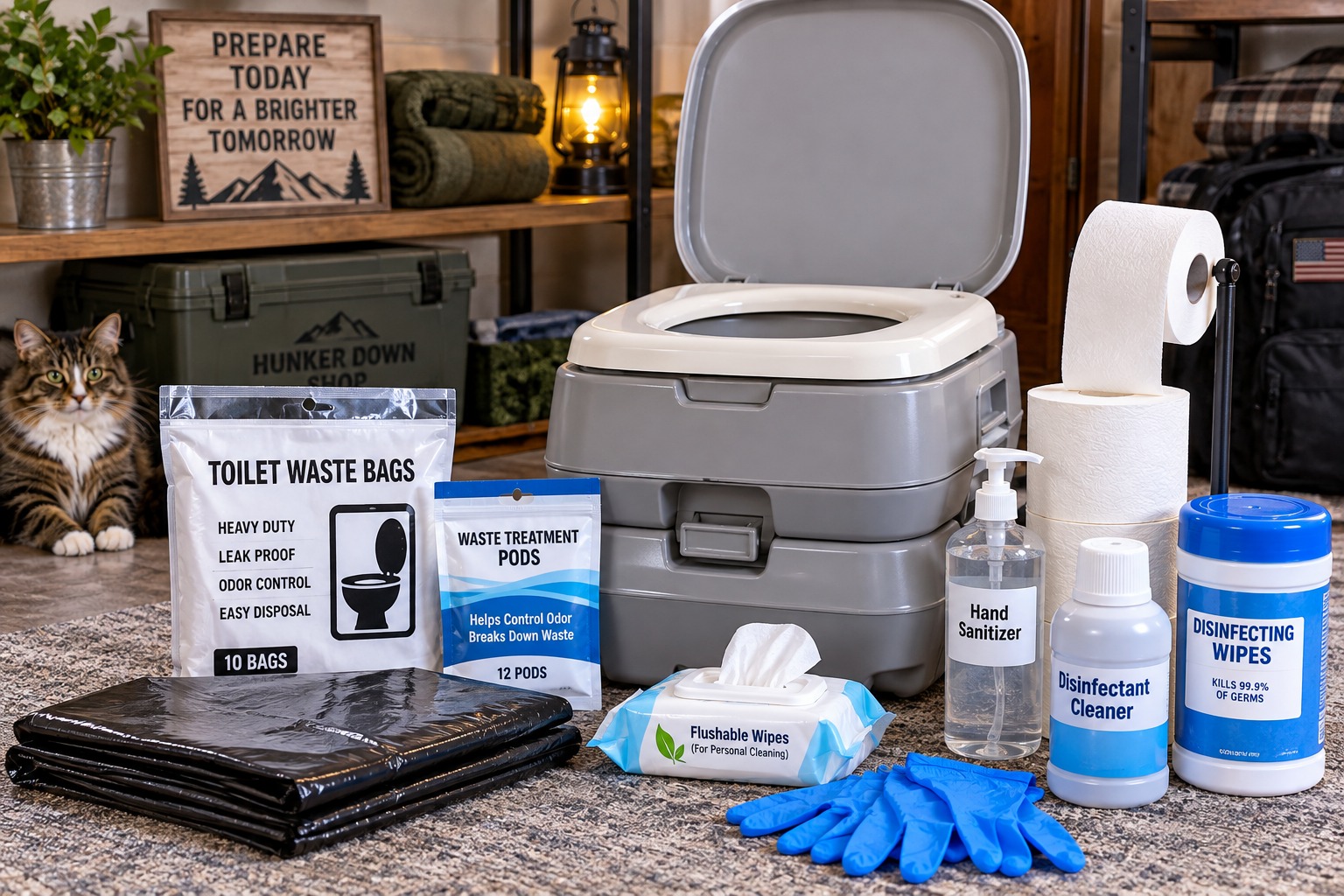
A toilet can become a major problem when water or sewer service is interrupted.
Before an emergency, learn whether toilets can safely be used during a local water outage. A sewer backup or damaged sewage system is different from simply losing household water service.
For longer emergencies, households may need an alternative sanitation method.
A portable emergency toilet or sturdy bucket can provide a temporary solution. Keep heavy-duty waste bags nearby. Toilet paper, disposable gloves and cleaning supplies are also useful.
Keep waste away from food, drinking water and living areas. Follow local instructions for safe disposal.
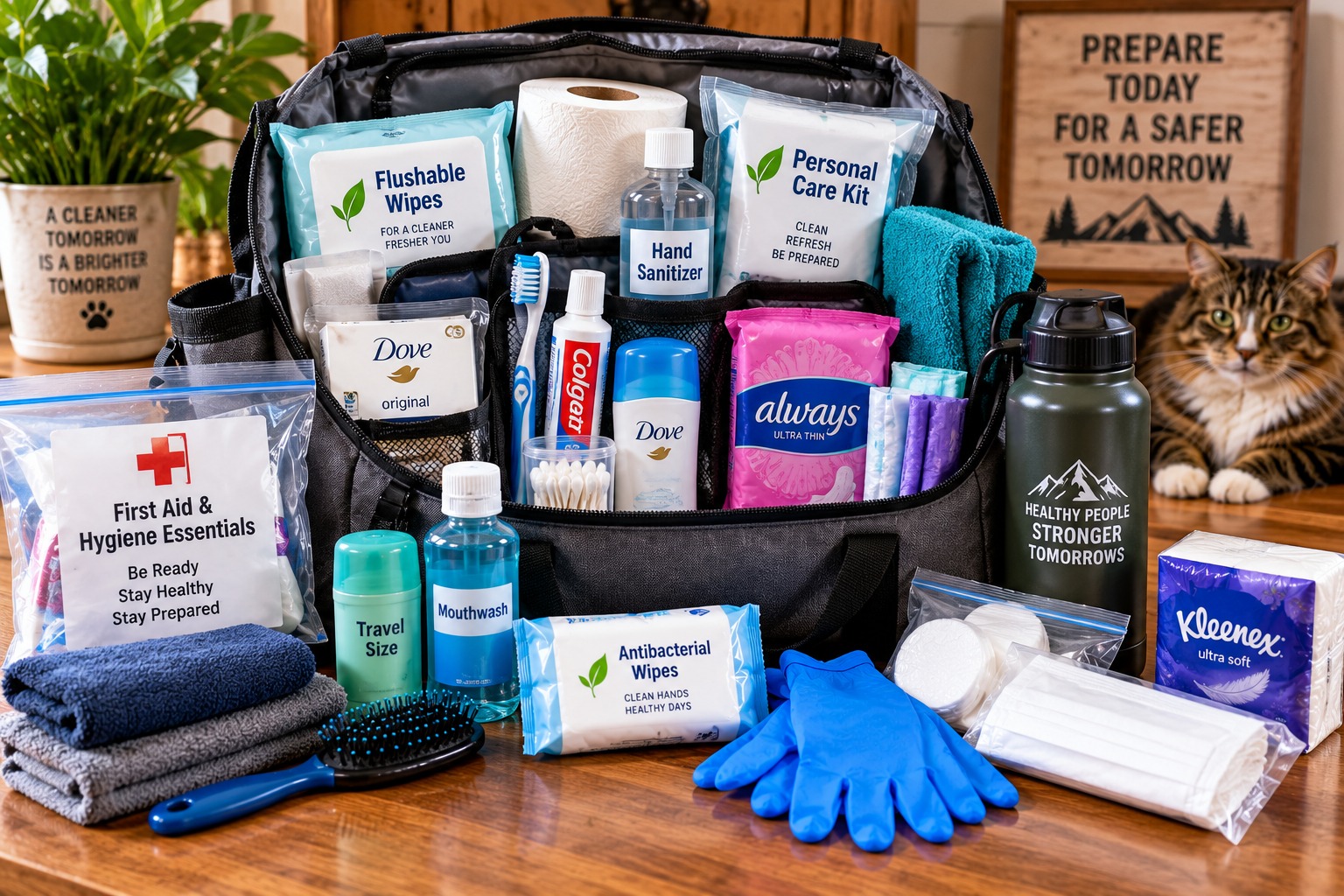
A basic hygiene kit does not need to be complicated or expensive.
Consider including:
Store supplies together in a waterproof container or easy-to-carry bag.
If you already maintain an emergency kit or bug-out bag, smaller versions of essential hygiene supplies can be included there as well.
Cleaning becomes especially important when several people are sharing a limited space during an emergency.
Keep food preparation areas away from waste and sanitation areas. Clean food surfaces often. Keep dirty water and waste away from stored food and drinking water.
Have sturdy garbage bags available and keep trash securely contained. If normal garbage pickup is interrupted, follow local instructions regarding temporary storage or disposal.
Disinfecting products can be useful, but always follow label directions. Never mix household cleaning chemicals unless the product instructions specifically direct you to do so.
A few days without a washing machine may not seem serious, but clean clothing becomes more important during a longer emergency.
Keep extra underwear, socks and basic clothing with your emergency supplies. Pack more for anyone who may need extra personal care.
A small amount of laundry detergent and a basin or bucket can provide a way to hand-wash essential items when sufficient safe water is available.
Dry clothing completely whenever possible before storing or wearing it.
Emergency hygiene plans should reflect the people in your household.
Older adults and people with limited mobility may need extra help with personal care. Keep any needed supplies on hand. These may include wipes, gloves, disposable pads and other personal-care items.
Prescription medications and medical supplies should remain separate from cleaning chemicals and waste.
Planning these details beforehand can make an already difficult situation much easier to manage.
Pets create sanitation needs of their own.
Keep extra litter and disposable litter pans for cats if possible. Dog owners should have waste bags and a designated method for disposing of pet waste.
Store pet food and drinking water away from litter boxes, waste and cleaning products.
Include paper towels, disposable gloves and pet-safe cleaning supplies in your emergency supplies. A few extra trash bags can also make cleanup much easier.
Instead of scattering hygiene supplies throughout the house, consider creating a dedicated emergency hygiene and sanitation container.
A large plastic tote can hold toilet paper, waste bags, gloves, soap, sanitizer, wipes and other supplies. Labeling the container makes it easy for anyone in the household to find.
You could also prepare a smaller portable sanitation kit for a vehicle or evacuation bag.
The goal is simple: when normal services stop, you should already know what you have and where it is.
Emergency preparedness is about maintaining the basics when everyday systems are temporarily unavailable.
Food and drinking water are essential, but sanitation should not be an afterthought. A supply of hygiene products, safe water, waste-management materials and cleaning supplies can help your household manage an extended outage more safely and comfortably.
Review your supplies periodically and replace items that have expired, leaked or been used.
Most importantly, prepare before you need them.
A little planning today can make an uncomfortable emergency much easier to handle tomorrow.
Hope is not a plan. Preparation is.