
An emergency radio can provide important information when severe weather, a power outage, or another emergency interrupts normal communication. Even when cell service is unreliable, a radio may still help you receive weather alerts and local emergency information.
But emergency radios come with all kinds of features. Some are genuinely useful. Others may sound impressive but add little value for the way you plan to use the radio.
Before choosing one, think about where you will keep it, how you will power it, and which features would actually help your household during an emergency.
One of the most important jobs of an emergency radio is keeping you informed.
Look for a radio capable of receiving NOAA Weather Radio broadcasts. These broadcasts provide official weather information, forecasts, watches, warnings, and other emergency messages.
For home preparedness, weather reception can be especially valuable during thunderstorms, tornadoes, winter storms, flooding, and other situations when conditions can change quickly.
AM/FM reception is useful too. Local radio stations may provide road closures, shelter information, community announcements, and other updates during a widespread emergency.
Not every emergency radio handles weather information the same way.
Some radios require you to tune to a weather channel manually. Others include an alert function that can notify you when an emergency message is broadcast.
An alert feature can be useful when you are not actively listening to the radio. Instead of keeping the radio playing continuously, you may be able to leave it in alert mode.
Check the product specifications carefully so you understand exactly what type of weather reception and alert capability a particular radio provides.
A radio is not very useful if you cannot turn it on.
For emergency preparedness, having more than one way to power your radio is a major advantage.
Many emergency radios operate with replaceable batteries. Others include rechargeable internal batteries, USB charging, solar panels, hand cranks, or a combination of several methods.
There is no single best power system for every household. What matters is having practical backup options.
If your radio uses replaceable batteries, keep fresh batteries with your emergency supplies and check them periodically.
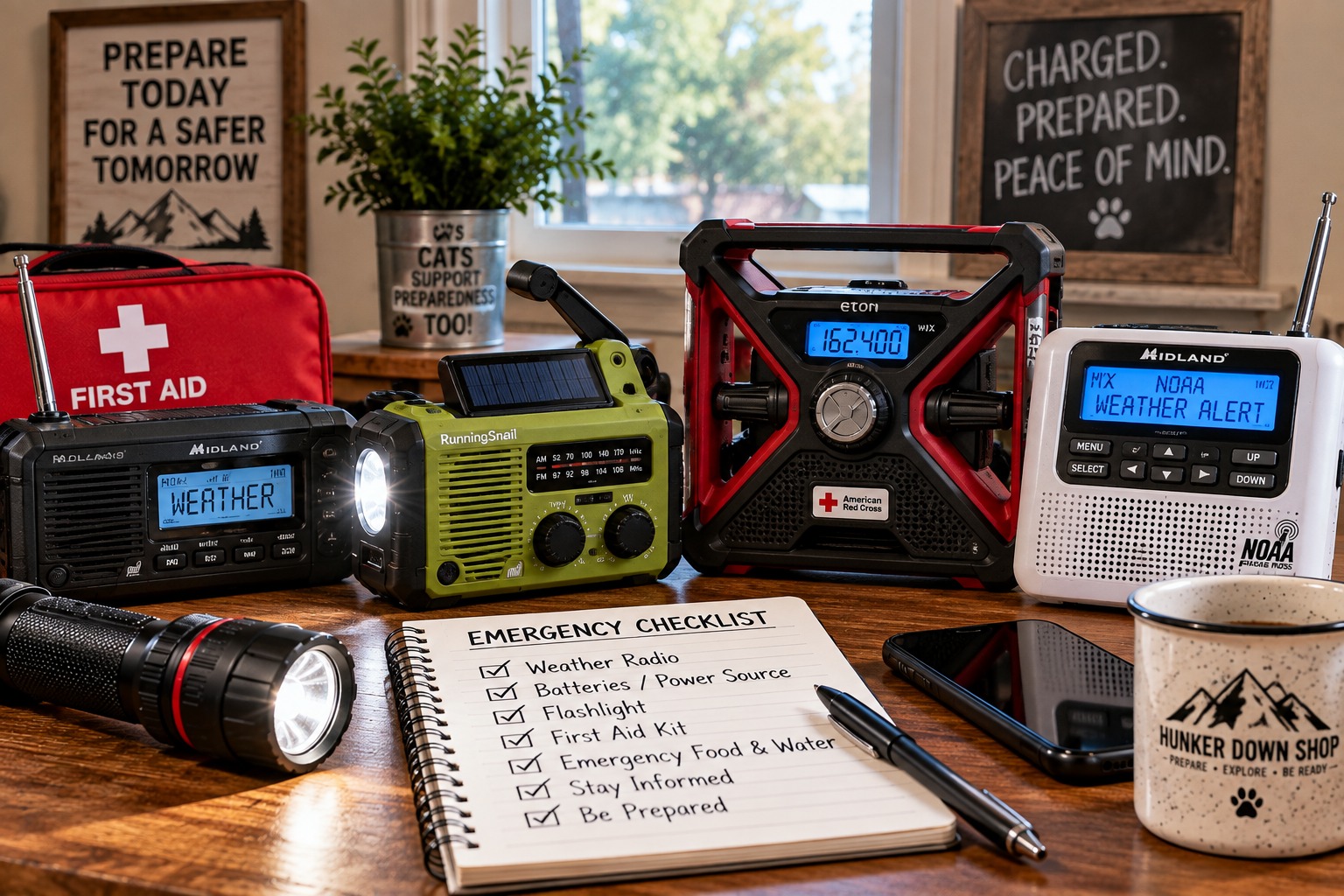
The hand crank is probably one of the most recognizable emergency radio features.
Its biggest advantage is simple: it provides another way to generate power when electricity and fresh batteries are unavailable.
However, hand-crank charging should generally be viewed as a backup rather than your everyday charging method. Cranking can require effort, and the amount of power generated varies among radios.
If you want a radio for a home emergency kit, vehicle kit, or evacuation bag, having a hand crank can provide useful additional peace of mind.
Some emergency radios include a small built-in solar panel.
Solar charging can provide another backup power option, particularly during an extended outage. However, small solar panels generally charge more slowly than plugging the radio into a normal power source.
Think of the solar panel as another layer of backup rather than something you must depend on exclusively.
If solar capability matters to you, read the manufacturer’s charging information so you know what to expect before an emergency occurs.
Many modern emergency radios include a USB port that can provide some power to a phone or other small device.
That can be useful when your phone battery is getting low and regular charging is unavailable.
However, an emergency radio usually should not replace a dedicated portable power bank. Its internal battery may need to preserve enough power to operate the radio itself.
For stronger backup power, consider keeping both an emergency radio and a charged portable power bank with your supplies.
A flashlight is another common feature found on emergency radios.
During a blackout, having lighting and communication equipment together can be convenient. Some radios also include reading lights or small lantern-style lights that can illuminate a larger area.
Check how the lighting operates before an emergency. You should know where the controls are and whether using the light significantly affects battery life.
Even if your radio includes a flashlight, keep separate flashlights and other emergency lighting available as well.
Rechargeable emergency radios often list battery capacity in milliamp-hours, usually shown as mAh.
A larger number can indicate greater energy storage, but battery capacity alone does not tell you how long a radio will operate.
Volume level, flashlight use, phone charging, reception conditions, and other features can all affect battery life.
Instead of choosing a radio based only on the largest battery number, consider the entire combination of power options and features.
Where will you use your emergency radio?
A larger radio may work perfectly in a home emergency kit. For a vehicle or evacuation bag, you may prefer something smaller and lighter.
Look for controls that are easy to operate and a design that feels sturdy enough for its intended use.
A carrying handle, wrist strap, or compact shape can also make the radio easier to move when necessary.
An emergency is a terrible time to learn how your equipment works.
Before storing your radio, turn it on and practice using its main features. Find the weather channels, test the flashlight, learn how the alert function works, and understand each charging method.
If several people live in your household, make sure more than one person knows how to operate it.
Keep the instruction manual with your emergency supplies if the radio has features that are difficult to remember.
The best emergency radio will not help much if nobody remembers where it is.
Keep it with your other emergency supplies or in another easy-to-reach location. Avoid burying it in the back of a closet beneath items you rarely use.
If the radio contains a rechargeable battery, check and recharge it periodically.
If it uses replaceable batteries, inspect those too. Batteries stored for long periods can lose power or leak.
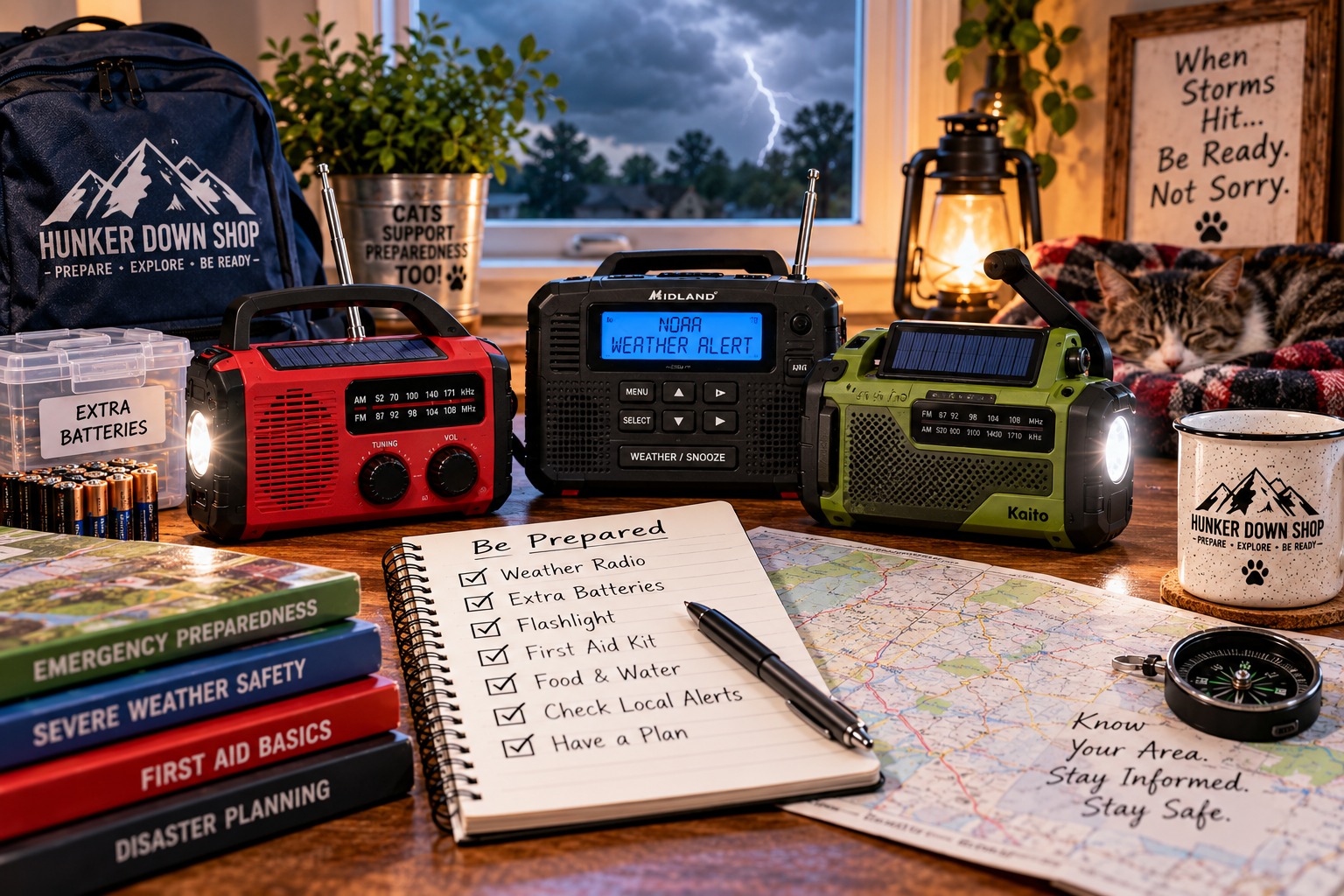
You do not necessarily need the emergency radio with the longest list of features.
For many households, the priorities are straightforward: reliable weather reception, AM/FM radio, dependable power options, simple controls, and useful backup features such as a flashlight.
Additional features can be worthwhile, but only if they fit the way you plan to use the radio.
The goal is not to own the fanciest piece of emergency equipment. The goal is to have a dependable way to receive information when your normal sources may not be available.
At Hunker Down Shop, we believe being prepared isn’t about fear—it’s about confidence.