To hunker down means to stay in a safe place and wait for dangerous conditions to pass. In emergency preparedness, it usually means remaining at home or another secure location instead of evacuating.
You may also hear the term “bugging in.” The idea is similar. You stay where you are and rely on the food, water, emergency supplies, and equipment you have prepared ahead of time.
Hunkering down does not mean hiding from the world or expecting disaster around every corner. It simply means recognizing that sometimes the safest place during an emergency is exactly where you already are.
Not every emergency requires evacuation. In many situations, traveling during dangerous conditions can expose you to greater risks than staying home.
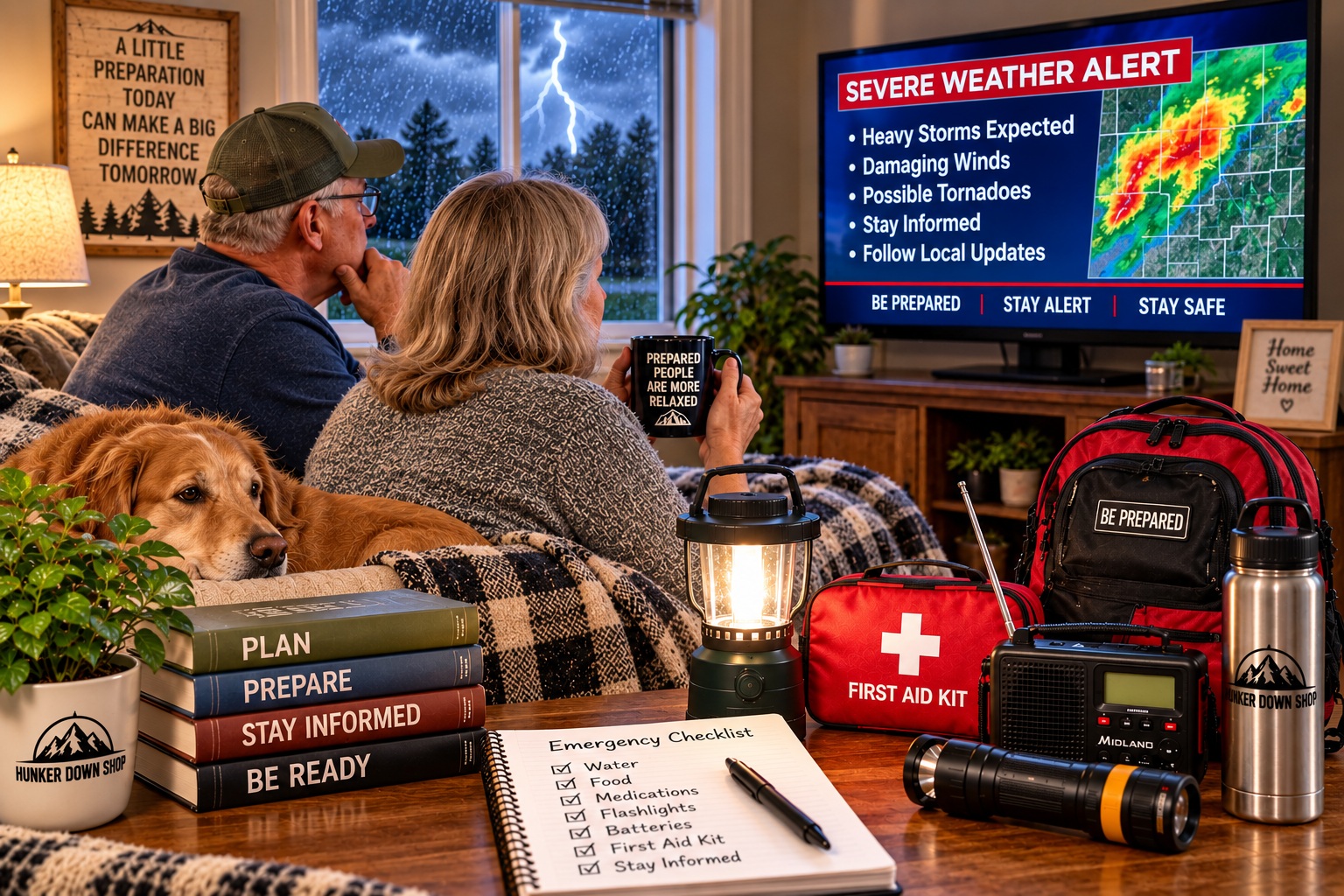
Severe storms are a good example. Tornadoes, blizzards, ice storms, high winds, and other dangerous weather can make roads unsafe. If officials recommend staying indoors, having the supplies you need at home can make that decision much easier.
A prolonged power outage may also require you to hunker down. You may need emergency lighting, backup power, an emergency radio, food, water, and ways to stay warm until electricity is restored.
Local authorities may also issue a shelter-in-place order during certain public safety emergencies. Always follow instructions from local emergency officials when deciding whether to stay or leave.
Being prepared also means knowing when it is time to go.
If emergency officials order an evacuation, follow their instructions. Wildfires, flooding, chemical emergencies, or damage to your home can make remaining in place dangerous.
Your home should never become a trap simply because you planned to stay there.
That is why a good emergency plan includes both possibilities. Prepare your home so you can safely remain there when appropriate, but also have an evacuation plan and essential supplies ready if you need to leave quickly.
Water is one of the most important supplies to have when you plan to hunker down.
A major storm or other emergency can interrupt normal water service or make tap water temporarily unsafe. Keeping an emergency supply of drinking water gives your household some protection against those disruptions.
Water filtration equipment can provide another option when stored water begins running low. Having more than one way to obtain safe drinking water gives you greater flexibility during a longer emergency.
An emergency food supply does not have to be complicated.
Shelf-stable foods, canned goods, food bars, freeze-dried meals, and emergency meal kits can all have a place in your preparedness supplies. Choose foods your household will actually eat and check expiration dates periodically.
Remember that a power outage may affect your ability to cook. A portion of your emergency food should require little or no preparation.
And don’t forget a manual can opener if canned food is part of your plan. A pantry full of food is considerably less impressive when nobody can open it.
When the electricity goes out, a dark house becomes difficult to navigate surprisingly quickly.
Keep flashlights and lanterns where family members can easily find them. Extra batteries should be stored nearby rather than hidden in some mysterious drawer nobody remembers during an outage.
Candles can provide light, but battery-powered lighting is generally easier to manage during an emergency. Whatever lighting you choose, make sure you know where it is before the house goes dark.
During severe weather and extended outages, information can be just as important as supplies.
An emergency radio can help you receive weather information and official instructions when internet service, television, or cellular networks are unavailable or unreliable.
Models with several power options can be particularly useful. Depending on the radio, those options may include replaceable batteries, rechargeable batteries, solar charging, or a hand crank.
Phones have become an important part of everyday communication, so keeping them charged during an emergency can matter.
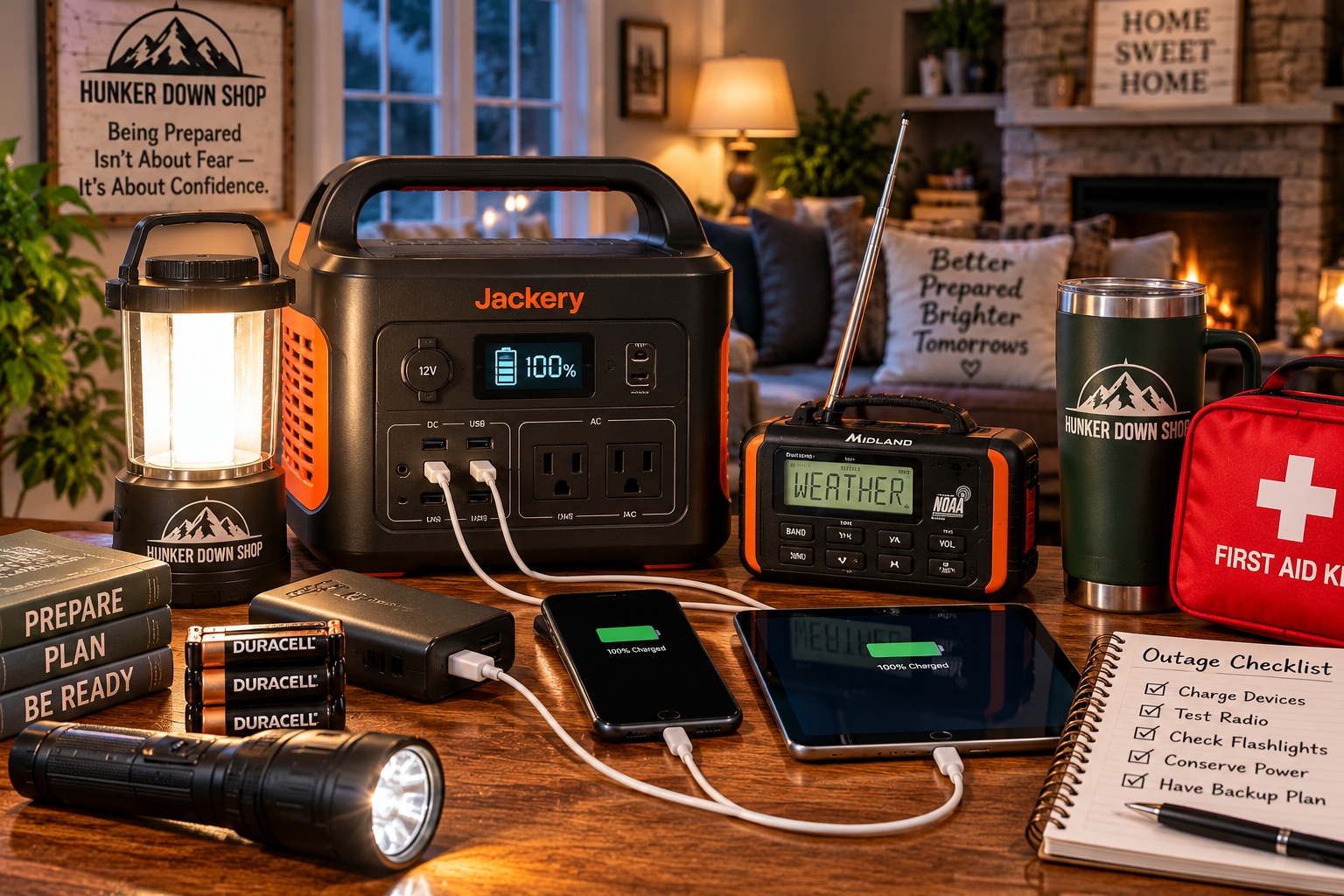
Portable power banks can provide temporary backup power for phones and other small electronics. Solar charging equipment can offer another option during longer outages.
Some households may also use larger backup power systems or power inverters for certain needs.
Whatever equipment you choose, learn how to use it safely before an emergency occurs. A blackout is not the ideal time to open the instruction manual for the first time.
Every household should have basic first aid supplies available.
Minor cuts, burns, headaches, and other everyday problems do not stop happening simply because the power is out or a storm is raging outside.
Think beyond first aid, too. Keep necessary medications, hygiene supplies, blankets, basic tools, pet supplies, and other household necessities where you can reach them.
Your emergency supplies should reflect the people and animals who actually live in your home.
You do not have to create a perfect emergency stockpile overnight.
Start with the basics. Add drinking water, shelf-stable food, flashlights, batteries, a first aid kit, and a reliable way to receive emergency information.
Then gradually add items such as backup power, water filtration, additional food, emergency kits, and supplies that fit the particular needs of your household.
Preparedness becomes much more manageable when you build it a little at a time.
Hunkering down is not about fear. It is about having enough preparation behind you that you can make sensible decisions when something unexpected happens.
When the lights go out, severe weather approaches, or authorities tell residents to remain indoors, you should not have to start from zero.
You already have the basics. You know where they are. You have a plan.
And if the situation requires you to leave instead, you are prepared to make that decision too.
That is really what it means to hunker down: prepare ahead of time, pay attention to what is happening around you, and be ready to respond with confidence rather than panic.
At Hunker Down Shop, we believe a little preparation today can make a big difference tomorrow.