An emergency survival kit can make an unexpected situation easier to manage.
A power outage, severe storm, unexpected evacuation, or vehicle problem can quickly disrupt an ordinary day.
The good news is that you don’t need an enormous collection of survival gear to get started. A practical emergency kit can be built a little at a time. Start with the basics, choose supplies you know how to use, and expand your kit as your needs and budget allow.
At Hunker Down Shop, we believe being prepared isn’t about fear — it’s about confidence.
Water should be one of your first priorities. Even a short disruption can affect access to clean drinking water, especially during storms, power outages, or other emergencies.
Keep bottled or stored water where it is easy to reach. A portable water filter can also provide another option when you’re away from home or your regular water supply is unavailable.
Remember that water isn’t only for drinking. You may also need it for preparing food, taking medications, and basic hygiene.
Next, add foods that store well and require little preparation.
Shelf-stable foods, food bars, and long-term food storage options can help you build a dependable supply without filling your pantry overnight.
Start with enough food for a few days. Then gradually increase your supply as your budget allows. Check expiration dates periodically and replace items when necessary.
Most importantly, choose foods you and your family will actually eat.
A power outage becomes much easier to manage when you aren’t searching through a dark house for a flashlight.
Keep flashlights or lanterns in easy-to-find locations and make sure you have the appropriate batteries available. Rechargeable lights and portable power banks can provide additional backup options.
A charged power bank may also help keep a cell phone operating when regular household power is unavailable.
Every emergency kit should include basic first-aid supplies for minor injuries.
Bandages, gauze, antiseptic supplies, medical tape, gloves, and other common first-aid items are a good starting point. Household members who take prescription medications should also consider how they would manage those needs during an emergency.
Don’t simply buy a first-aid kit and forget about it. Look through the contents so you know what is inside and how to find it quickly.
Your emergency survival kit should also help you stay warm and dry during cold or severe weather.
Emergency blankets, rain protection, warm clothing, and basic shelter supplies can help protect you from cold, wind, and wet conditions. What you need will depend on your climate, household, and whether your kit is intended for home, vehicle, or travel use.
Consider the needs of children, older adults, and pets when planning this part of your kit.
Reliable information can be just as important as physical supplies.
An emergency radio can help you receive weather alerts and official information when electricity, internet service, or cellular networks are disrupted. When choosing an emergency radio, consider useful features such as weather alerts, flashlights, rechargeable batteries, or charging capabilities.
Whatever communication equipment you choose, learn how to operate it before an emergency occurs.
Once the essentials are covered, add tools that make sense for your situation.
A multi-tool, manual can opener, fire-starting supplies, work gloves, cordage, and other basic tools may prove useful during an outage, evacuation, camping trip, or roadside emergency.
You don’t need every survival gadget you see. Choose dependable equipment that serves a practical purpose and that you know how to use.
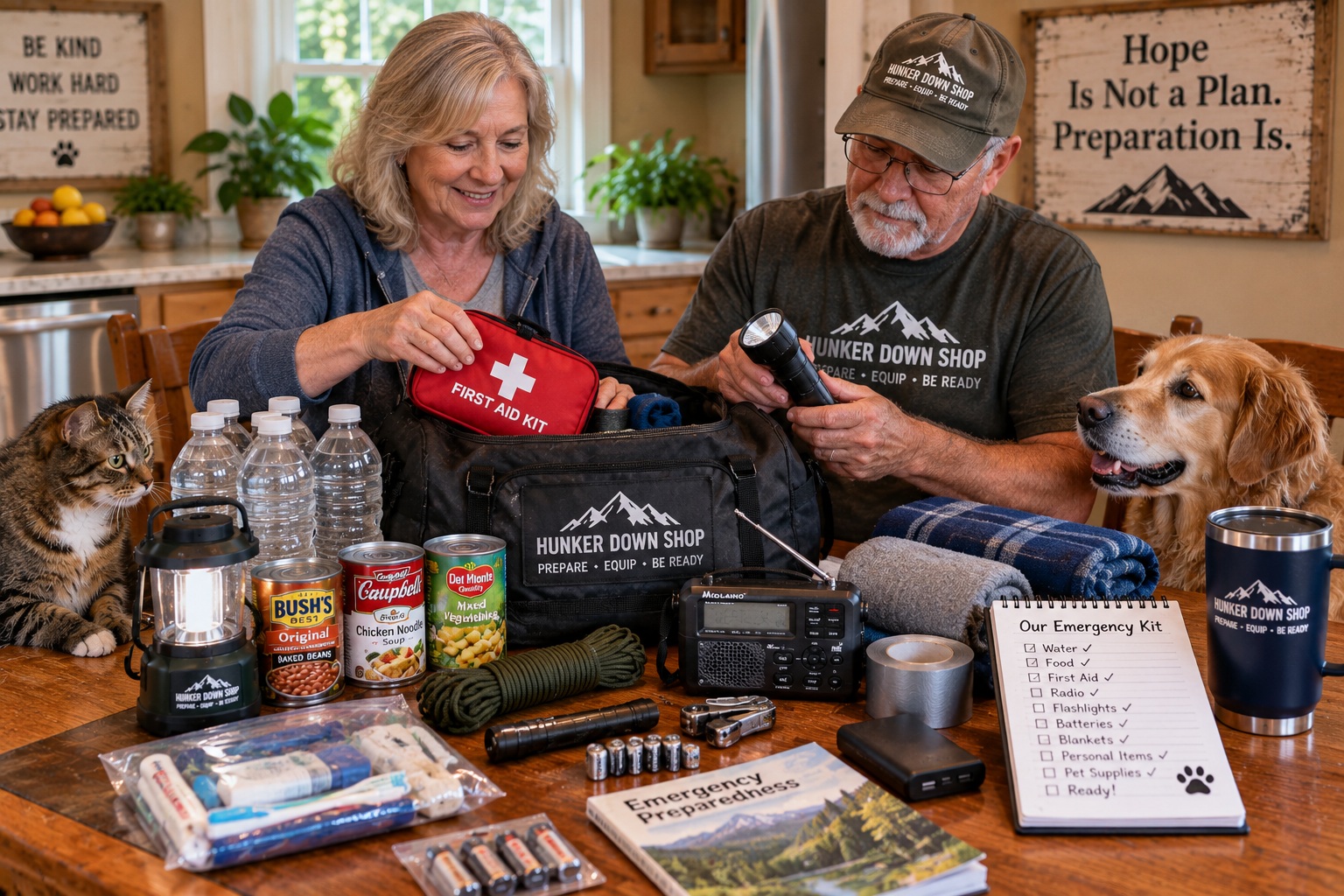
Preparedness doesn’t have to happen in one expensive shopping trip.
Begin with water, food, lighting, first aid, warmth, and communication. Then add supplies gradually. Review your kit every few months, replace expired items, recharge batteries and power banks, and adjust the contents as your family’s needs change.
You can also build separate supplies for different situations. Your home emergency kit may be larger, while a vehicle kit or bug-out bag should contain portable essentials.
No emergency kit can prepare you for every possible situation. That’s not the goal.
The goal of an emergency survival kit is to have enough basic supplies and knowledge to handle common disruptions more safely and comfortably. Start with what you can afford, learn how to use what you have, and improve your preparedness over time.
A little preparation today can make a big difference tomorrow.