A well-stocked first aid kit can make a big difference when someone gets hurt. You may need to treat a minor cut, scrape, burn, sprain, or other injury before additional help is available.
But one first aid kit may not be enough.
Keeping supplies at home is important, but emergencies don’t always happen at home. A separate kit in your vehicle can help when you’re traveling, while a smaller portable kit is useful for camping, hiking, and other activities away from home.
The goal isn’t to prepare for every possible medical emergency. It’s to have practical supplies available when and where you’re most likely to need them.
Your home kit can be your most complete first aid kit because you don’t have to worry as much about size or weight.
Start with supplies for common minor injuries. These may include:
Your household may need additional supplies based on the ages and needs of the people who live there.
Store your kit somewhere adults can reach quickly, but keep medications and potentially hazardous items safely away from children and pets.
A car first aid kit is easy to overlook until you need one.
Cuts, scrapes, blisters, minor burns, and other injuries can happen while you’re traveling. You may also encounter an accident or roadside emergency when help isn’t immediately nearby.
Your vehicle kit can include many of the same basics as your home kit:
Because a vehicle can experience extreme heat and cold, inspect the kit regularly. Replace anything that has expired, leaked, dried out, or been damaged by temperature changes.
If you carry medications in your vehicle, follow their storage instructions. Some medications should not be left in a hot or freezing car.
A portable first aid kit should balance usefulness with size and weight.
For camping, hiking, fishing, hunting, or other outdoor activities, consider the kinds of injuries that could occur and how far you’ll be from help.
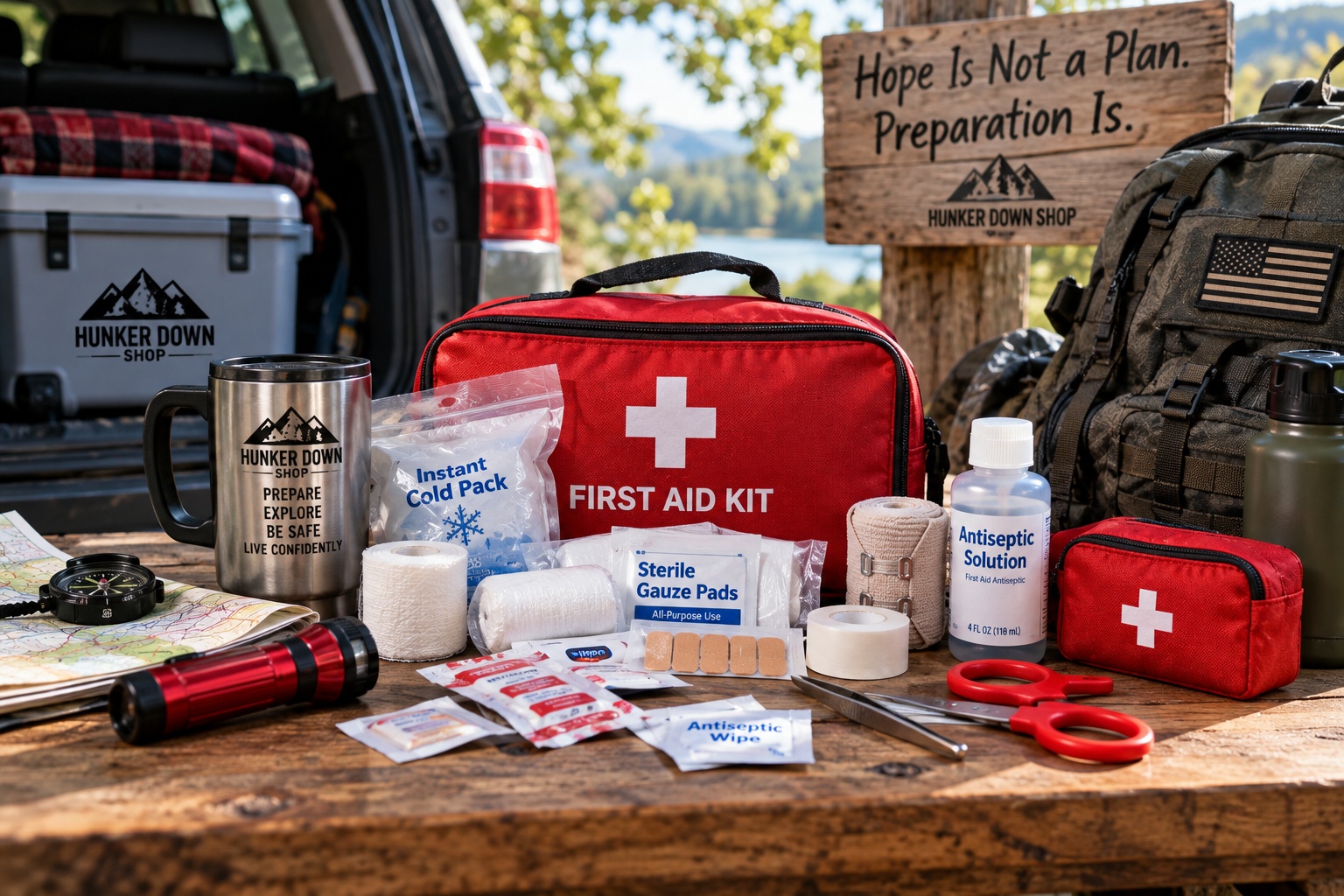
A compact kit might contain bandages, gauze, antiseptic supplies, gloves, blister care, medical tape, tweezers, and an emergency blanket.
Longer trips or remote locations may justify a more extensive kit.
Don’t bury your first aid supplies underneath everything else in a backpack. Keep them somewhere you can reach quickly.
Buying a first aid kit isn’t a one-and-done project.
Bandages get used. Packages tear. Adhesive dries out. Sterile products and medications can expire.
Check your kits periodically and replace missing or outdated supplies. This is especially important after you’ve used the kit during an emergency.
Keeping extra first aid supplies at home can make restocking easier.
Keep a first aid kit wherever an injury is reasonably likely to happen and where you can reach it quickly.
For many households, that means having one in the home and another in each frequently used vehicle. You may also want a portable kit with your camping equipment or emergency gear.
Everyone in the household should know where the kits are stored.
A first aid kit doesn’t help much if nobody can find it.
Supplies are only part of being prepared.
Knowing basic first aid can help you respond more confidently during an emergency. Consider taking a recognized first aid and CPR course, especially if it’s been several years since your last training.
For serious injuries or medical emergencies, call 911 or your local emergency number. A first aid kit is not a substitute for professional medical care.
You don’t need an enormous medical bag to be better prepared.
Start with a dependable collection of basic supplies. Keep one at home, put another in the car, and consider a smaller portable kit for travel or outdoor activities.
Then check them occasionally.
Replace what you’ve used. Watch expiration dates. Make sure everyone knows where the supplies are.
A few minutes spent checking your first aid kit today could save valuable time when someone needs help.
A little preparation today can make a big difference tomorrow.