
When the electricity goes out, emergency lighting can make a dark home safer and easier to manage. Moving around the house becomes harder, finding supplies takes longer, and simple tasks can become unsafe.
A good emergency lighting plan doesn’t need to be complicated. A few well-chosen lights placed where you can reach them easily can make a power outage much easier to manage.
Instead of relying on one flashlight—or hoping your phone battery lasts—it’s better to have several types of emergency lighting available for different jobs.
A dependable flashlight is one of the simplest pieces of emergency equipment you can own.
Keep flashlights in places where you can find them without searching in the dark. Bedrooms, the kitchen, basement, garage, and your main emergency-supply area are all practical locations.
When choosing a flashlight, consider:
Extremely bright isn’t always necessary. During a long outage, a lower setting may provide plenty of light while helping batteries last longer.
Flashlights are excellent when you need to see where you’re going, but they aren’t always convenient for lighting a room.
That’s where an emergency lantern can help.
A lantern placed on a table or counter can illuminate a larger area while leaving your hands free. This can be useful while preparing food, playing cards, checking supplies, or simply sitting together during an outage.
Consider keeping at least one lantern in the main area where your household would gather during a blackout.
Headlamps aren’t just for camping.
During an emergency, being able to see while keeping both hands free can be extremely useful. A headlamp can help while carrying supplies, checking a breaker panel, tending to pets, or moving around outdoors.
They’re also small enough to keep in a vehicle, emergency kit, or bedside drawer.
LINK OPPORTUNITY: headlamps → appropriate category if we have one worth linking.
A flashlight isn’t particularly useful when its batteries are dead.
If some of your emergency lights use replaceable batteries, keep extras with your preparedness supplies. Check them periodically and replace old or damaged batteries.
It can also help to standardize your emergency lighting when possible. If several lights use the same common battery size, you won’t need to store as many different types.
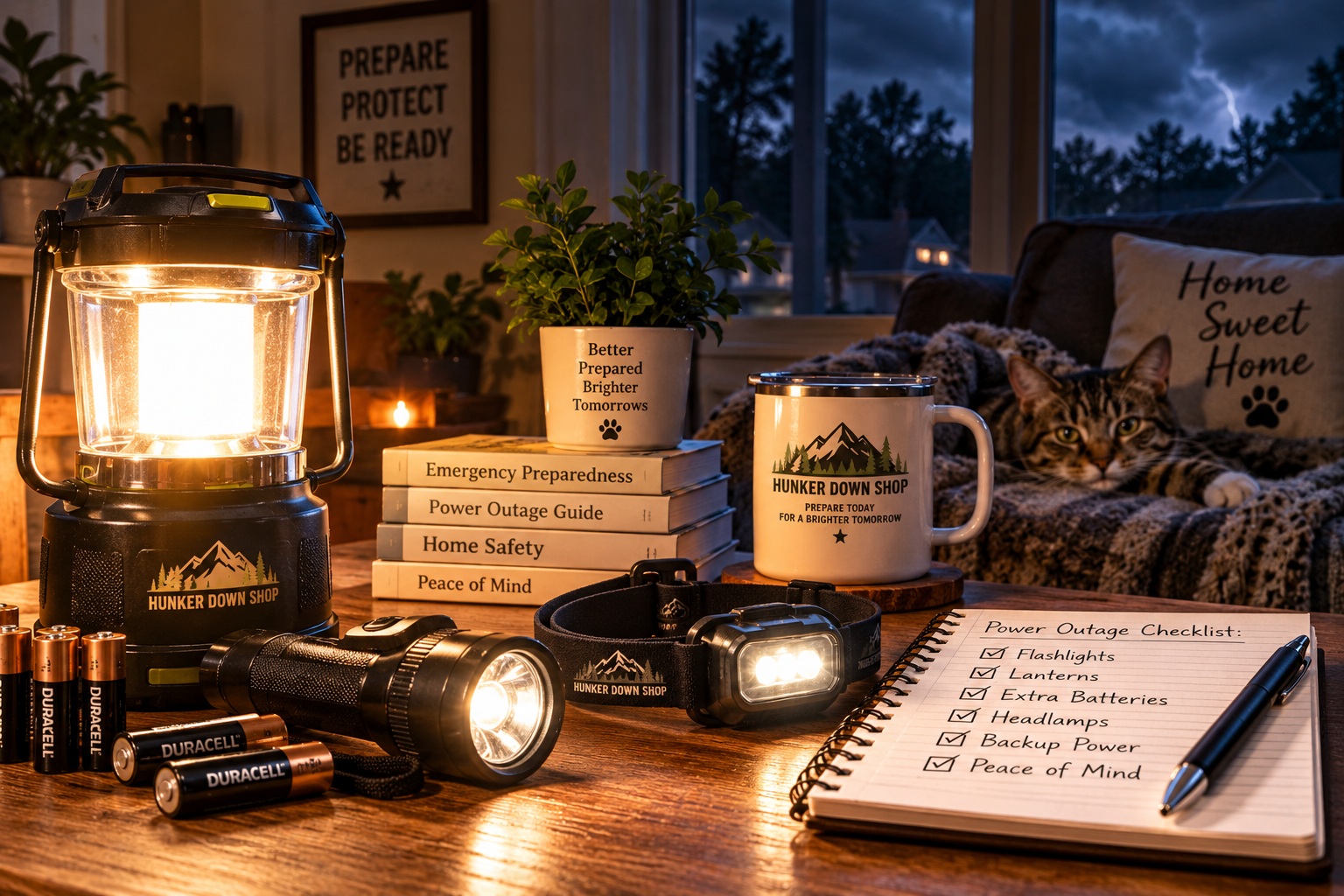
Rechargeable flashlights and lanterns can reduce your dependence on disposable batteries, but they need to be kept charged.
Some models can be recharged from a portable power station, power bank, vehicle, or compatible solar equipment. Having more than one charging option can be valuable during a longer outage.
A combination of rechargeable and battery-powered lighting can provide useful backup if one power source becomes unavailable.
One of the easiest preparedness improvements costs nothing: decide where your emergency lights will live.
You shouldn’t have to search through closets and drawers after the electricity has already gone out.
Consider placing lights near:
If you have older adults or anyone with limited mobility in the household, easy access to lighting becomes even more important.
And don’t forget the pets. A cat sitting in the middle of a dark hallway can become an unexpected obstacle remarkably quickly.
Candles may provide light during a power outage, but open flames introduce an unnecessary fire risk—especially around children, pets, curtains, bedding, or other combustible materials.
Battery-operated lanterns and flashlights are generally much safer emergency-lighting choices.
If candles are used, they should never be left unattended.
A smartphone flashlight is certainly convenient when you need quick light.
But during a prolonged outage, your phone is also an important communication tool. Using it continuously as a flashlight drains a battery you may need for calls, messages, weather information, or emergency alerts.
Use the phone flashlight when necessary, but let dedicated emergency lights handle most of the job.
You don’t need dozens of lights or expensive equipment.
Start with enough dependable lighting to safely move through your home and illuminate the areas you use most. Add extra batteries or charging options, and keep everything where it can be reached easily.
A practical emergency lighting setup might include a few flashlights, one or two lanterns, a headlamp, spare batteries, and at least one rechargeable option.
Then test everything occasionally. Equipment that hasn’t been checked in years shouldn’t be something you discover doesn’t work when the house suddenly goes dark.
Emergency preparedness doesn’t have to mean preparing for every possible disaster. Sometimes it simply means knowing exactly where the flashlight is.
A little preparation today can make a big difference tomorrow.