
When the power goes out, having a backup source of electricity can make a difficult situation much easier to manage. But choosing between a generator vs portable power station isn’t always simple. Each has advantages, and the right choice depends on what you need to power, how long you expect to use it, and where you plan to use it.
Traditional generators can provide substantial power for appliances, tools, and other equipment. Portable power stations offer quiet, convenient electricity without gasoline or engine exhaust. For some households, having access to both types of backup power may provide the most flexibility.
Before choosing one, it helps to understand what each option can—and cannot—do.
A portable generator produces electricity using an engine, usually powered by gasoline, propane, or another fuel. Depending on its size and output, a generator may be able to operate larger appliances or several devices at once.
Generators can be especially useful during longer outages when more power is needed. However, fuel storage, maintenance, noise, and safe placement all need to be considered.
Never operate a fuel-burning generator inside a home, garage, basement, shed, or other enclosed or partially enclosed area. Generator exhaust contains carbon monoxide, which can be deadly.
A portable power station stores electricity in a rechargeable battery. Instead of burning fuel to produce power, it supplies electricity that has already been stored. Depending on the model, you may be able to recharge it from a household outlet, vehicle, or compatible solar panels.
Portable power stations are quiet and don’t produce engine exhaust while operating. That makes them useful for powering smaller electronics and certain appliances in places where a fuel-burning generator would not be appropriate.
Capacity and output vary considerably between models, so it’s important to check how much power your equipment requires before choosing a unit.
Both can provide backup electricity, but they do it in very different ways.
A generator produces electricity as long as it has fuel and can continue operating. That can make a generator useful during longer outages or when you need to run equipment with higher power demands.
A portable power station runs from energy stored in its battery. It doesn’t require gasoline while operating, produces no engine exhaust, and is generally much quieter. However, once the stored energy is depleted, the unit needs to be recharged.
The better choice depends less on which type is “best” and more on what you need it to do.
A generator may be a practical choice when you need:
Generators do require more planning. You’ll need the proper fuel, a safe place to operate the unit outdoors, and routine maintenance.
Before buying a generator, check its rated and starting wattage and compare those numbers with the equipment you expect to power.
A portable power station may be useful when you want:
Larger power stations may also operate certain household appliances, depending on the station’s output and battery capacity.
Again, the numbers matter. A power station that easily charges phones and lanterns may not necessarily operate a refrigerator, microwave, heater, or other high-demand appliance.
Before choosing a generator or portable power station, make a list of the devices and appliances you would actually want to use during an outage.
Start with the essentials. That might include a refrigerator, lights, phones, medical equipment, a radio, or other important devices. Your priorities may be very different from someone else’s.
Next, check the wattage requirements for each item. Some appliances require additional power when they first start, so don’t assume that running wattage tells the whole story.
You don’t necessarily need enough backup power to operate everything in your house at the same time. Prioritizing essential equipment can help you choose a practical option without buying more capacity than you need.
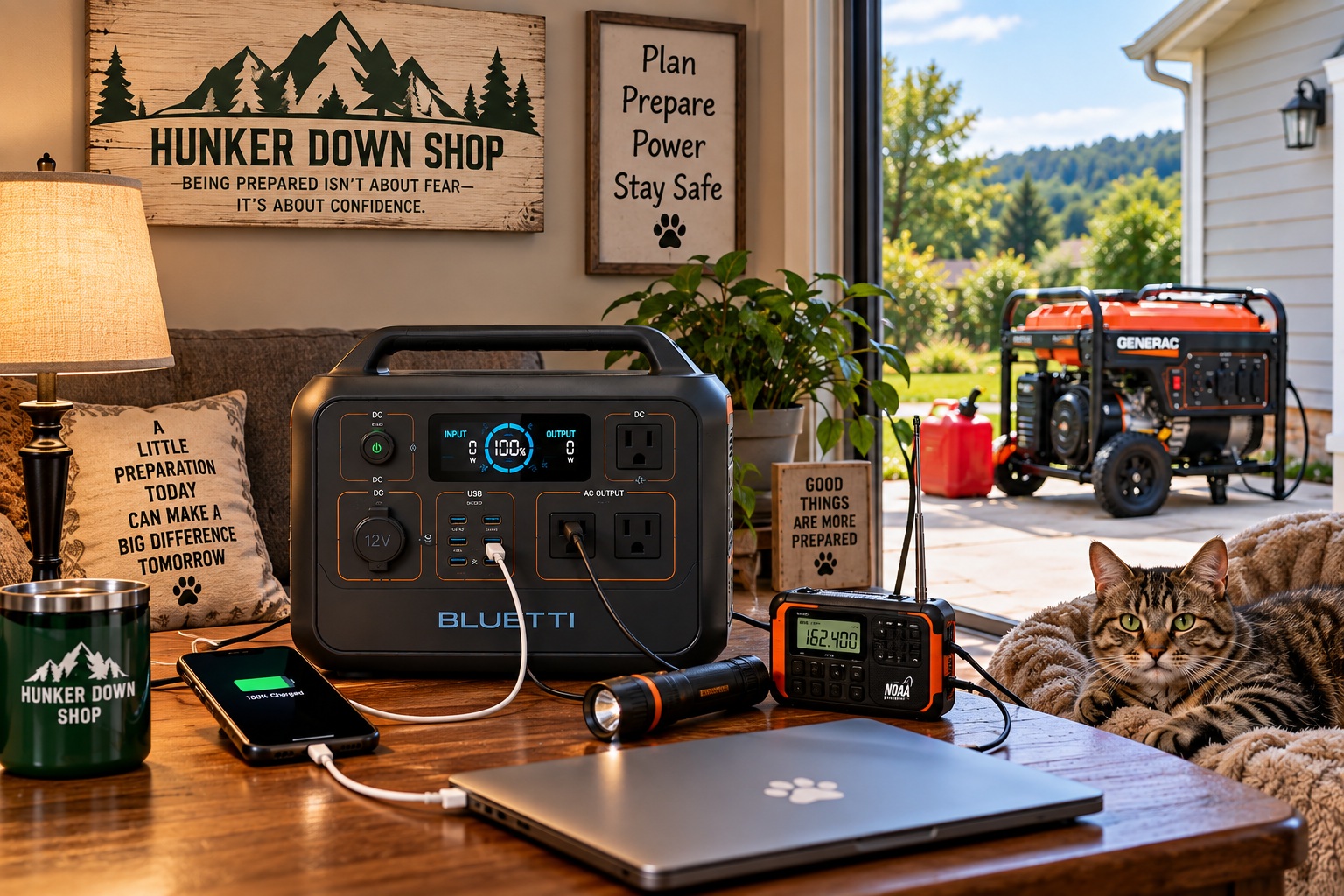
For some households, the answer doesn’t have to be one or the other.
A portable power station can handle smaller devices quietly while a generator is reserved for equipment with greater power demands. Using backup power strategically may also reduce how often you need to operate a fuel-burning generator.
For example, you might use stored battery power overnight for lights, phones, or a radio, then operate a generator outdoors when you need to recharge equipment or run larger appliances.
That kind of combination can provide flexibility during a longer outage.
A power inverter serves a different purpose than either a generator or portable power station. Instead of producing or storing electricity, an inverter converts direct current (DC) power from a battery or other compatible DC source into alternating current (AC) power that many household devices use.
Inverters can be useful in vehicles, RVs, off-grid systems, and some emergency backup-power setups. Smaller models may be suitable for electronics and other low-power devices, while larger inverters can support greater electrical loads when paired with an appropriate battery and electrical system.
As with generators and power stations, capacity matters. Check both the inverter’s power rating and the requirements of the equipment you plan to operate. The battery or DC power source must also be capable of supplying the required energy.
Some portable power stations can be recharged with compatible solar panels. This can provide another charging option during camping trips or extended outages when household electricity isn’t available.
Solar charging speed depends on factors including the size of the solar array, weather conditions, available sunlight, and the power station itself. It’s important to check compatibility and charging specifications before pairing equipment.
No matter which backup-power option you choose, safety should always come first.
Fuel-burning generators must be operated outdoors and kept well away from doors, windows, vents, and other openings where exhaust could enter a building. Never operate a generator inside a home, garage, basement, shed, or other enclosed or partially enclosed space.
Keep generators dry and follow the manufacturer’s instructions for fuel, maintenance, grounding, extension cords, and electrical connections. Never connect a portable generator directly to household wiring unless the system has been properly designed and installed for that purpose.
Portable power stations don’t produce engine exhaust while operating, but they still contain batteries and electrical components. Keep them dry, provide any ventilation specified by the manufacturer, and use compatible chargers, cables, and accessories.
Whatever equipment you choose, read the instructions and learn how to operate it before the power goes out.
Backup power isn’t useful only during emergencies.
Portable power stations can provide electricity while camping, traveling, or working away from an outlet. Generators can supply power at remote locations and during extended outages.
Inverters and solar equipment can provide additional options depending on how your system is designed.
Think about how you’ll realistically use the equipment throughout the year. A backup-power solution that serves more than one purpose may provide greater value than something that sits untouched until an emergency.
There isn’t one backup-power solution that’s right for every household.
A generator may make more sense when you need higher output or extended operation with available fuel. A portable power station may be a better fit when quiet operation, portability, and rechargeable battery power are priorities.
For some households, a combination of generator power, stored battery power, an inverter, or solar charging may provide the flexibility they want.
Start by deciding what you truly need to keep running. Then compare the capacity, output, runtime, charging options, fuel requirements, and safety considerations of the equipment you’re considering.
Being prepared doesn’t mean powering everything exactly as you would on an ordinary day. It means having a practical plan for keeping the things that matter most operating when regular power isn’t available.
A little preparation today can make a big difference tomorrow.