
Fall camping can be one of the best ways to enjoy the outdoors. Cooler temperatures, colorful scenery, fewer insects, and less crowded campgrounds can make an autumn trip especially enjoyable.
But fall camping also brings a few challenges. Days get shorter, nights get colder, and pleasant afternoon weather can change quickly after sunset. Rain, wind, and unexpected temperature drops can turn a comfortable campsite into a chilly one.
A little extra planning can help you enjoy the season without being caught unprepared.
Fall weather varies dramatically across the country. A comfortable October afternoon in one area may mean freezing temperatures somewhere else.
Check both the daytime forecast and the expected overnight low before leaving home. Pay attention to rain and wind forecasts too.
Remember that conditions can also be different at higher elevations or in heavily wooded areas.
Pack for the weather you could encounter, not simply the weather you expect when you arrive.
A warm afternoon can make it easy to underestimate how cold the campsite may become overnight.
Choose a sleeping bag appropriate for the temperatures you expect. If nighttime temperatures could fall significantly, give yourself some extra protection rather than relying on the day’s high temperature.
Extra blankets and dry clothing can provide additional warmth. Keeping tomorrow’s clothes protected from moisture also means you won’t have to start a cold morning by putting on damp clothing.
Your sleeping setup deserves extra attention during fall camping because staying comfortable at night makes the entire trip more enjoyable.
Your tent becomes especially important when fall weather changes unexpectedly.
Before your trip, check the tent for damage and make sure you have the stakes, poles, and other pieces you need. A tarp can provide additional protection for equipment or create a covered area around camp.
Choose your campsite carefully. Avoid low areas where water may collect during heavy rain, and secure loose equipment before turning in for the night.
Keeping your sleeping area and clothing dry can make an enormous difference when temperatures fall.
One of the biggest differences between summer and fall camping is easy to overlook: you have less daylight.
Tasks that were easy to finish after dinner during June or July may suddenly be happening in the dark.
Keep flashlights and lanterns where you can reach them easily rather than waiting until darkness falls to find them. Make sure batteries are fresh or rechargeable lights are fully charged before leaving home.
A lantern can also make cooking, organizing equipment, and relaxing around camp much easier after sunset.
There’s something particularly satisfying about a warm meal on a cool fall evening.
A camp stove or portable grill gives you more options for preparing hot meals and beverages when temperatures drop. Plan simple foods that don’t require complicated preparation, especially if daylight disappears earlier than you expected.
Before leaving home, make sure you have the fuel and accessories required for the equipment you’re taking.
Always use grills and camp stoves according to their instructions and in properly ventilated outdoor areas. Never bring fuel-burning cooking equipment inside a tent for warmth or cooking.
Fall showers don’t always give much warning.
Pack rain protection where you can reach it quickly instead of burying it at the bottom of your gear. A rain jacket or poncho can help you stay dry while setting up camp, cooking, or securing equipment.
It’s also smart to protect important supplies from moisture. Electronics, extra clothing, matches, batteries, and other essentials can be stored in waterproof bags or containers.
Staying dry isn’t just about comfort. Wet clothing can make cool temperatures feel much colder.
Camping chairs might not seem like essential fall equipment until you’ve spent an evening trying to stay comfortable on a cold picnic bench.
Portable seating gives you a dry place to relax around camp, eat meals, or enjoy the fire.
If rain is possible, choose a place where chairs can be protected or folded away when you’re finished using them. Nobody wants to discover a soaking-wet chair first thing in the morning.
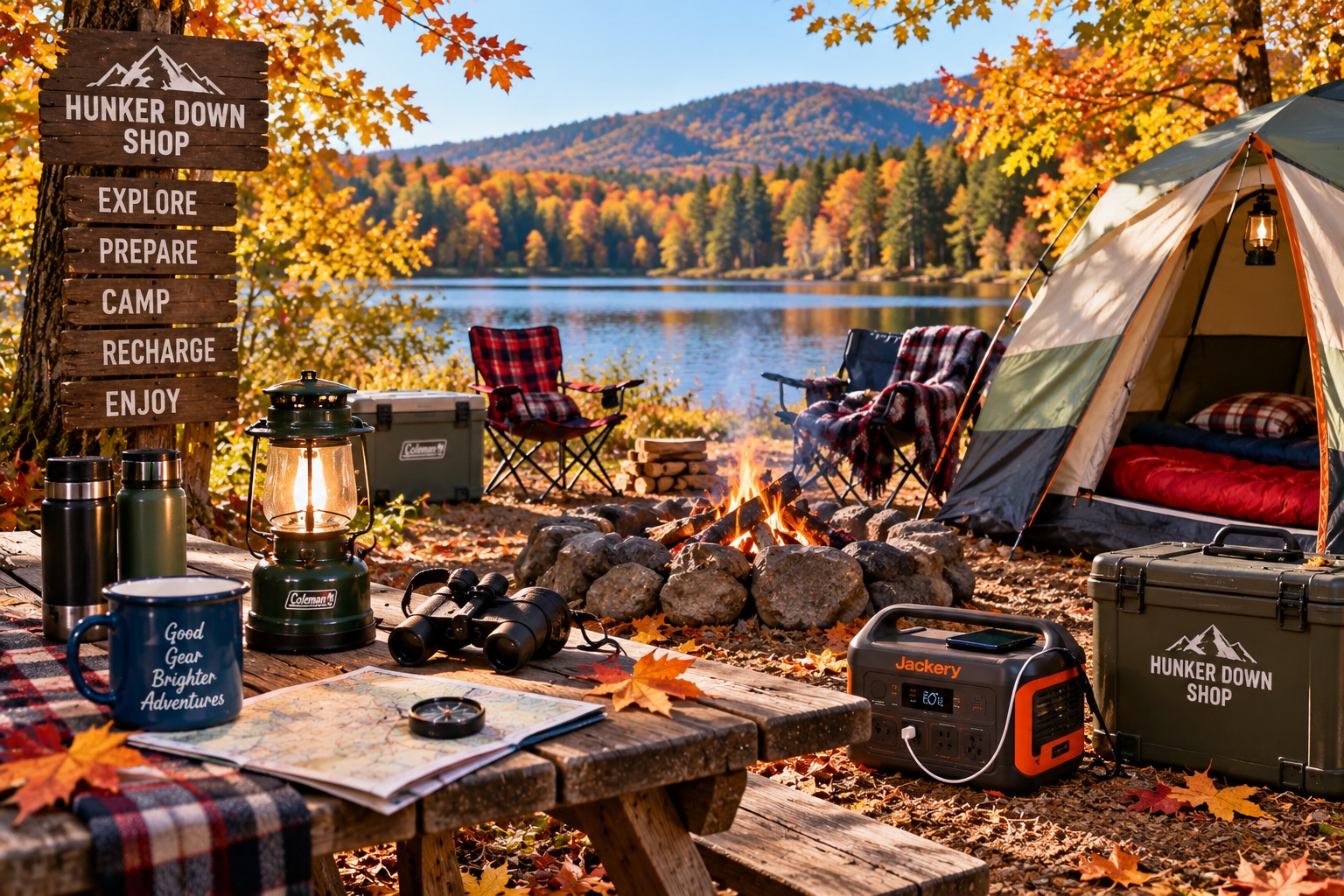
Phones, rechargeable lanterns, GPS devices, and other electronics can be useful at camp, but eventually they need power.
A portable power bank may be enough for a short trip with only a phone or a few small devices. Campers who use more electronics may prefer a larger portable power station.
Whatever you bring, charge it fully before leaving home. Cooler temperatures can also affect battery performance, so don’t wait until a device is nearly dead before recharging it.
Portable power is convenient, but it shouldn’t replace basic preparedness. Keep a regular flashlight and spare batteries available as backup.
Cooler weather doesn’t eliminate the need to store food properly.
A cooler can keep perishable foods organized and at safe temperatures while also helping protect supplies from the mess of a busy campsite.
Keep food secured when you’re not using it and follow the food-storage rules for the campground or area you’re visiting, particularly where wildlife may be present.
Fall camping may mean fewer insects, but it certainly doesn’t mean animals have stopped looking for an easy meal.
Fall camping doesn’t require packing the entire house.
Instead, think about the things that would matter most if conditions became colder, wetter, darker, or windier than expected.
An extra blanket, dry socks, backup flashlight, rain protection, additional drinking water, and another easy meal don’t take much planning. Yet they can make a big difference when the weather doesn’t cooperate.
If you’re still assembling your basic camping gear, our Essential Camping Checklist: Gear, Safety Tips & Survival Preparedness can help you cover the everyday camping essentials before adding seasonal items.
Fall camping isn’t simply summer camping with a heavier jacket.
Shorter days, colder nights, changing weather, and fewer daylight hours mean your equipment and plans may need to change too.
Check the forecast, prepare for the overnight temperature, keep yourself and your gear dry, and make sure you have dependable lighting and power.
Then enjoy the part that makes fall camping worth the extra preparation: crisp evenings, changing leaves, quiet campgrounds, and another good reason to spend some time outdoors.
A little preparation today can make a big difference tomorrow.