
A car emergency kit can make a flat tire, dead battery, sudden storm, or unexpected road closure much easier to handle. If you are several miles from home, the supplies in your vehicle may be all you have until help arrives.
A well-planned car emergency kit can help you handle common roadside problems and stay more comfortable while you wait. You do not need to pack your entire house into the trunk. Start with practical essentials and adjust them for the season, your vehicle, and the people who regularly travel with you.
Here are some of the most useful items to keep in your vehicle.
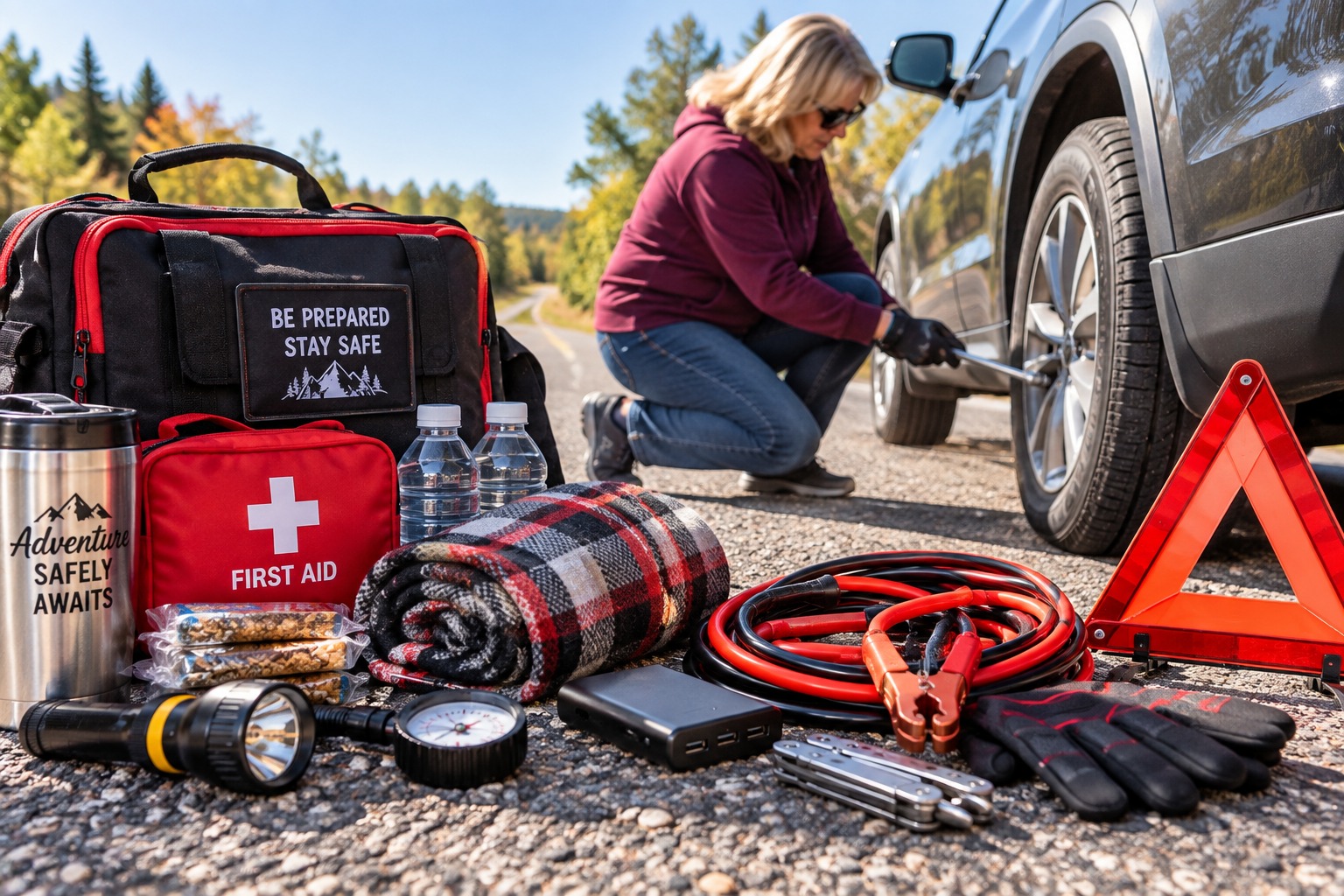
Every car emergency kit should begin with equipment for common roadside problems.
Jumper cables or a portable jump starter can help when a battery fails. A tire pressure gauge, basic tools, and equipment for dealing with a flat tire can also be useful.
Reflective warning equipment can help make your stopped vehicle more visible to other drivers, especially after dark or during poor weather.
Check these supplies occasionally. Emergency gear does little good if batteries are dead, tools are missing, or equipment is buried beneath everything else in the trunk.
Vehicle trouble does not always happen during daylight.
Keep a dependable flashlight where you can reach it easily. A second light or lantern can provide additional illumination if you need to inspect the vehicle, change a tire, or wait for assistance after dark.
Store spare batteries with your emergency supplies if your lights require them.
A headlamp can also be useful because it keeps both hands free while you work.
Minor cuts, scrapes, burns, and other injuries can happen anywhere, including along the roadside.
A basic first aid kit should be part of your car emergency kit. Check it periodically and replace anything that has expired or been used.
If someone in your household has special medical needs, consider what additional supplies may be appropriate for that person when traveling.
Do not leave medications in a vehicle if temperature extremes could damage them. Follow the storage instructions provided for each medication.
A short roadside delay can become a long wait during severe weather, heavy traffic, or a widespread emergency.
Keeping some drinking water in the vehicle can make an unexpected delay much easier to handle. Rotate stored water regularly, particularly when it has been exposed to extreme temperatures.
Shelf-stable foods are useful as well. Choose foods that are easy to open, require no cooking, and can tolerate being stored in the vehicle.
Food bars, packaged snacks, and other ready-to-eat options can provide a convenient backup until you reach home or another safe location.
Cold temperatures can turn a roadside emergency into a dangerous situation.
During fall and winter, add blankets, warm gloves, hats, and extra layers of clothing to your vehicle supplies. Hand warmers and other compact warming items can also be helpful.
If you regularly travel in snowy areas, consider carrying an ice scraper, snow brush, small shovel, and traction supplies.
Never depend on your vehicle’s heater as your only source of warmth. Mechanical problems, fuel shortages, or a blocked exhaust system can make that option unavailable or unsafe.
A car emergency kit is not just for winter.
During warm weather, extra drinking water becomes especially important. Sun protection, lightweight clothing, and other hot-weather supplies may also be useful.
Never remain inside a dangerously hot vehicle while waiting for assistance. Move to a safer location when conditions allow, and pay attention to signs of heat-related illness.
A working phone can be one of your most valuable tools during a roadside emergency.
Keep a charging cable in the vehicle and consider carrying a portable power bank as a backup. Remember that a power bank must be charged periodically to remain useful.
Write down important phone numbers as well. If your phone is damaged or loses power, you may not be able to access contacts stored electronically.
A paper list takes almost no room and can be surprisingly valuable during an emergency.
You do not need to carry a complete workshop, but a few basic tools can help with minor problems.
A multi-tool, work gloves, adjustable wrench, screwdrivers, duct tape, and sturdy utility cord can handle many simple tasks.
Choose tools you know how to use. Emergency equipment is most valuable when you are familiar with it before you actually need it.
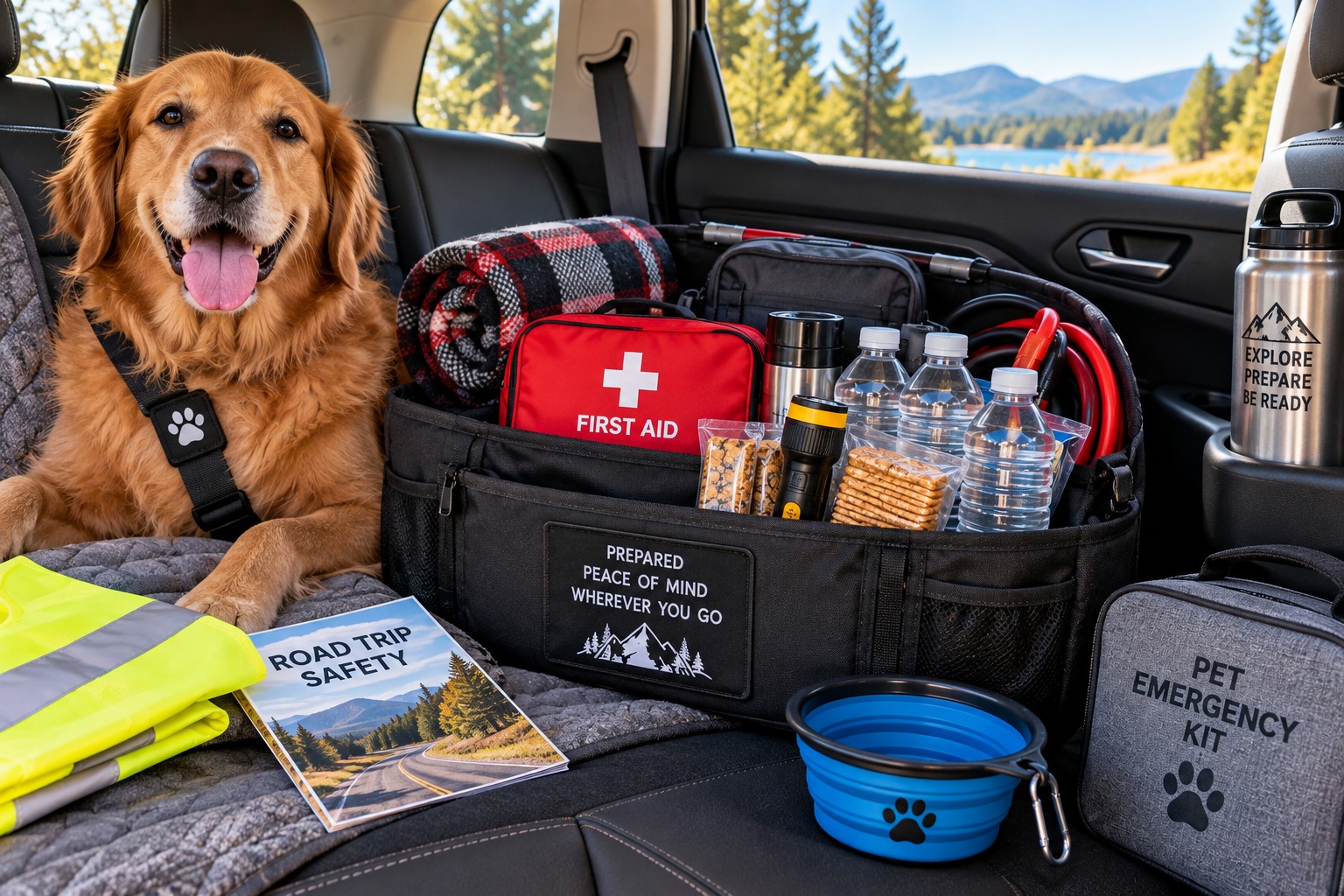
Your vehicle emergency supplies should reflect who rides with you.
If you regularly travel with children, older adults, or pets, include items they may need during an extended delay.
For pets, that might include a small amount of food, extra water, a collapsible bowl, leash, carrier, waste bags, and a copy of important identification or veterinary information.
Comfort items can matter too. An emergency does not have to be life-threatening to become miserable after several hours.
Store your vehicle registration, insurance information, roadside assistance details, and emergency contact information where you can find them quickly.
A small notebook and pen can also be useful for recording information after an accident or writing down directions when your phone is unavailable.
Avoid storing sensitive documents in the vehicle unless they are actually necessary.
You do not need to buy everything at once.
Start with the supplies most likely to help in your area and during your normal driving. Then add seasonal items and other useful equipment over time.
Keep everything organized in a sturdy bag, backpack, or container so supplies are easy to find. Review your car emergency kit several times a year and replace anything that is expired, damaged, or missing.
Most trips end exactly as planned. The reason to prepare is for the one that does not.
A few basic supplies can make a breakdown, storm, traffic delay, or other roadside emergency much easier to manage.
At Hunker Down Shop, we believe being prepared isn’t about fear—it’s about confidence.