
Pet emergency preparedness means having essential supplies ready before you need them. Emergencies can disrupt your pet’s routine in minutes.
Power outages, severe weather, fires, and evacuations can happen with little warning. Your dog or cat depends on you to be ready. Food, water, medications, identification, shelter, and other basics should all be part of your plan. Preparing now can make caring for your pets much easier during an emergency.
Pets depend on familiar routines. An emergency can change those routines quickly.
You may need to stay home without power. You might move to a safer part of your house. In some situations, you may need to evacuate.
Keeping pet supplies organized saves valuable time. You won’t have to search for food, medications, carriers, or other essentials. Your pet emergency plan should also be part of your household emergency plan.
A pet emergency kit keeps important supplies together and ready to use. Store it where you can reach it quickly.
Include enough pet food and water for several days. Pack bowls, medications, waste bags, and basic grooming supplies. Cats should also have litter and a small litter pan.
Add copies of vaccination records and important medical information. Include your veterinarian’s contact information too.
Keep a recent photo of each pet in the kit. A photo can help identify your pet if you become separated.
Every pet should also have secure identification. Check collars and ID tags regularly. Make sure your current phone number is easy to read.
For evacuation, keep a carrier or leash where you can grab it quickly. Frightened pets may hide or try to escape during an emergency.
Food and clean water are essential parts of pet emergency preparedness. Keep an emergency supply for each pet in your household.
Store several days of your pet’s regular food. Sudden diet changes can cause stomach problems, especially during stressful situations.
Rotate the food regularly so it stays fresh. Replace anything that is damaged or past its expiration date.
Store extra water for your pets too. Do not assume your normal water supply will always be available.
Pack lightweight food and water bowls for an evacuation. Collapsible bowls can save space in a pet emergency kit.
If you have several pets, calculate supplies for each animal. Multiple pets can go through food and water surprisingly fast!
An evacuation can be stressful for both you and your pets. Planning ahead can make leaving home much easier.
Keep carriers, leashes, and harnesses where you can reach them quickly. Make sure each item fits your pet securely.
Cats should have a sturdy carrier for safe transportation. Dogs should have a secure leash or harness.
Add a familiar blanket or small comfort item when space allows. Familiar smells may help your pet settle in unfamiliar surroundings.
Know where you could take your pets before an emergency occurs. Some shelters and temporary lodging locations may not accept animals.
FEMA recommends including your pets in your family emergency plan before a disaster happens.
Include a backup destination in your emergency plan. Keep important phone numbers and addresses with your other emergency information.
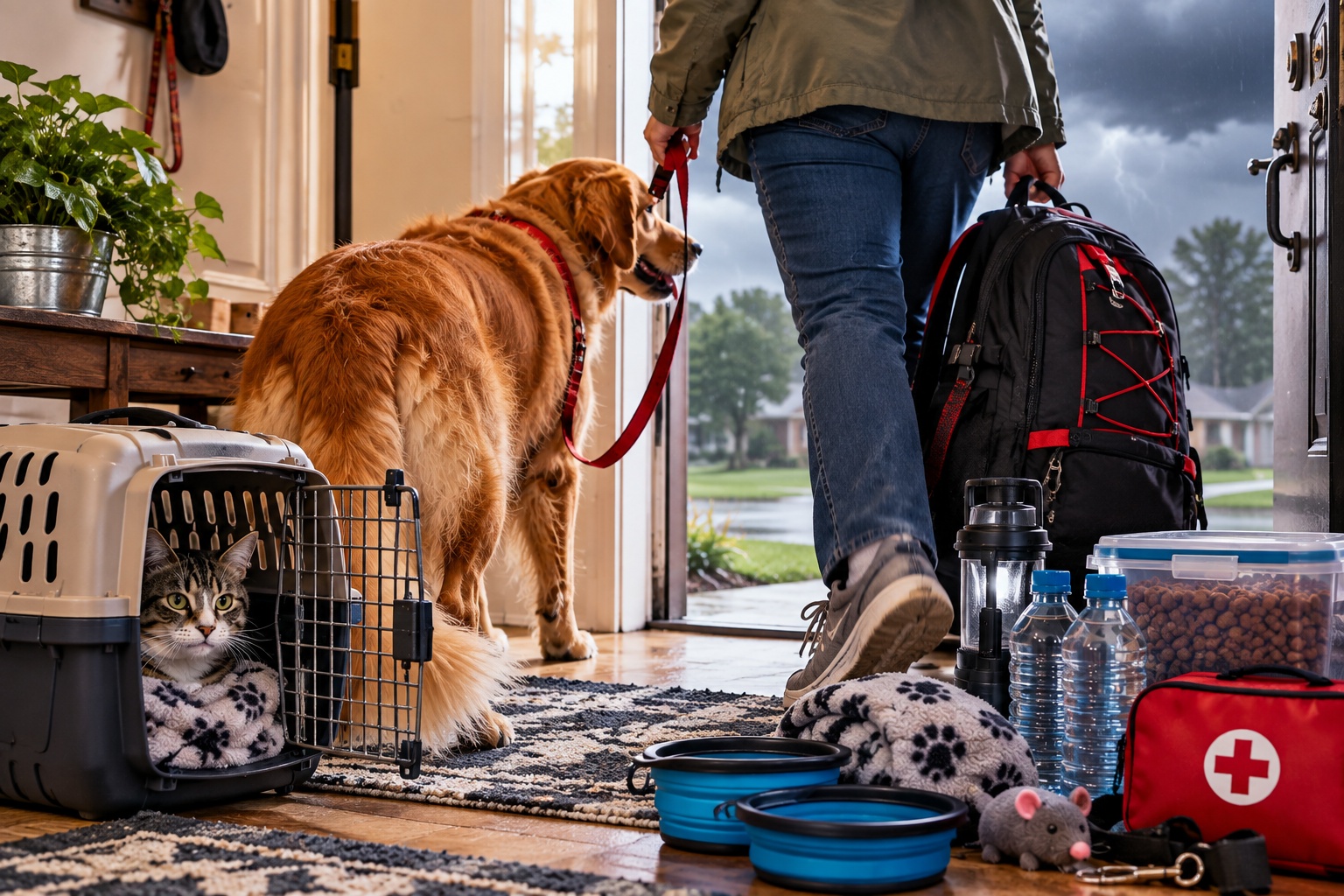
Pets can become injured or sick during an emergency. A few basic supplies can help with minor problems.
Keep a pet first aid kit with your emergency supplies. Check it occasionally and replace expired or damaged items.
If your pet takes medication, keep an extra supply when possible. Follow your veterinarian’s instructions for storing prescription medicines.
Write down medication names, doses, and schedules. Keep this information with your pet’s medical and vaccination records.
Add your veterinarian’s phone number and the number for a nearby emergency veterinary clinic. Keep paper copies in case your phone is unavailable.
Never give your pet human medication unless a veterinarian tells you it is safe.
Emergencies can be frightening for pets. Strange noises, unfamiliar places, and changes in routine may increase their stress.
Pack a familiar blanket, towel, or small bed when space allows. Familiar scents can provide comfort in a new environment.
Consider the weather when preparing your supplies. Pets may need extra warmth during winter outages or severe storms.
Keep cats safely contained during stressful situations. Dogs should remain leashed when outside a secure area.
A few familiar items can make an unfamiliar situation easier for your pet.
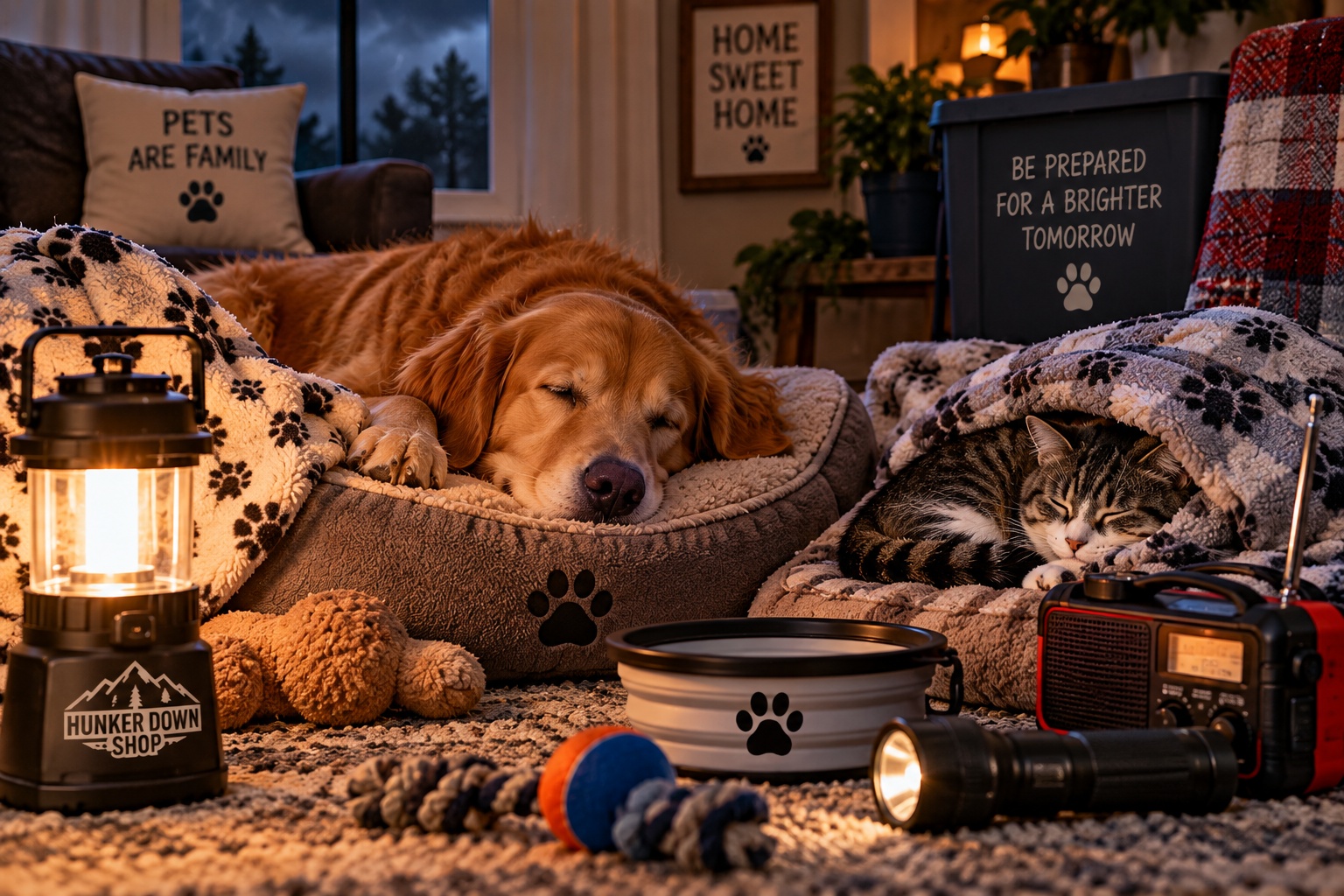
Emergencies can cause frightened pets to run or hide. Proper identification can help bring a lost pet home.
Make sure your pet wears a collar with an up-to-date ID tag. Check the tag regularly for worn or unreadable information.
If your pet is microchipped, keep your contact information current with the registry. A microchip only helps when the information is accurate.
Keep a recent photo of each pet with your emergency records. Include photos that clearly show markings, coloring, and other identifying features.
You can also keep a photo of yourself with your pet. It may help show ownership if you become separated.
A pet GPS tracker or other safety gear can add another layer of protection.
These tools may help you locate a pet that gets loose during an evacuation, severe weather event, or other emergency.
Browse our pet safety supplies for additional ways to help protect your pets.
Having supplies ready is important. Knowing how you will use them is just as valuable.
Practice getting your pets into their carriers or ready to leave. This can reveal problems before a real emergency occurs.
Make sure everyone in your household knows where the pet supplies are stored. Decide who will gather the pets if you must leave quickly.
Review your plan several times each year. Replace expired supplies and update medical records, identification, and contact information.
A little practice can make an emergency evacuation safer and less stressful for everyone.
Your pets rely on you when something unexpected happens. Preparing their supplies now can make an emergency easier to manage.
Start with the basics. Gather food, water, medications, identification, first aid supplies, and safe transportation.
Then add items that provide shelter and comfort. Review your supplies regularly and replace anything that is expired or no longer suitable.
Pet emergency preparedness does not have to be complicated. A simple plan can help you act quickly when your pets need you most.
At Hunker Down Shop, we believe preparation is about confidence, not fear. Planning for your pets is another way to help protect the whole family.