
When disaster strikes, you may have only minutes to leave your home. A bug-out bag gives you a head start. It contains the basic supplies you need to stay safe for the first 72 hours after an emergency.
You don’t have to expect the end of the world to benefit from having one. In fact, bug-out bags make sense for everyday emergencies. Wildfires, tornadoes, hurricanes, floods, chemical spills, power outages, and even gas leaks can force families to leave home with little warning.
The good news is that building a bug-out bag is easier than many people think.
A bug-out bag is a portable emergency kit designed to help you survive for about three days away from home. The goal is simple: grab your bag and go if authorities tell you to evacuate or your home becomes unsafe.
Most people store their bug-out bag in a backpack because it is easy to carry. However, some families prefer duffel bags or rolling bags if they expect to travel by vehicle.
A bug-out bag is not meant to replace your long-term food storage. Instead, it fills the gap between leaving home and reaching a safer place.
Many people assume bug-out bags are only for survival enthusiasts. However, emergencies happen every year to ordinary families.
You might need a bug-out bag if:
Although you hope these situations never happen, preparing ahead of time can reduce stress when every minute counts.
Every family’s needs are different. Still, most bug-out bags should include the same basic categories of supplies.
Water is your highest priority. Include bottled water if space allows. You can also pack water purification tablets or a portable water filter to make water from natural sources safer to drink.
Choose lightweight foods with a long shelf life. Freeze-dried meals are popular because they are easy to carry and provide complete meals. Energy bars, trail mix, peanut butter, and ready-to-eat foods also work well.
Remember to include a manual can opener if you pack canned food.
A basic first aid kit should include bandages, antiseptic wipes, pain relievers, gauze, medical tape, tweezers, and any prescription medications your family needs.
Pack at least one flashlight along with extra batteries. Better yet, choose an LED flashlight that uses less power. Glow sticks also provide light without batteries.
Matches in a waterproof container, a lighter, or a ferro rod can help you start a fire for warmth or cooking when conditions allow.
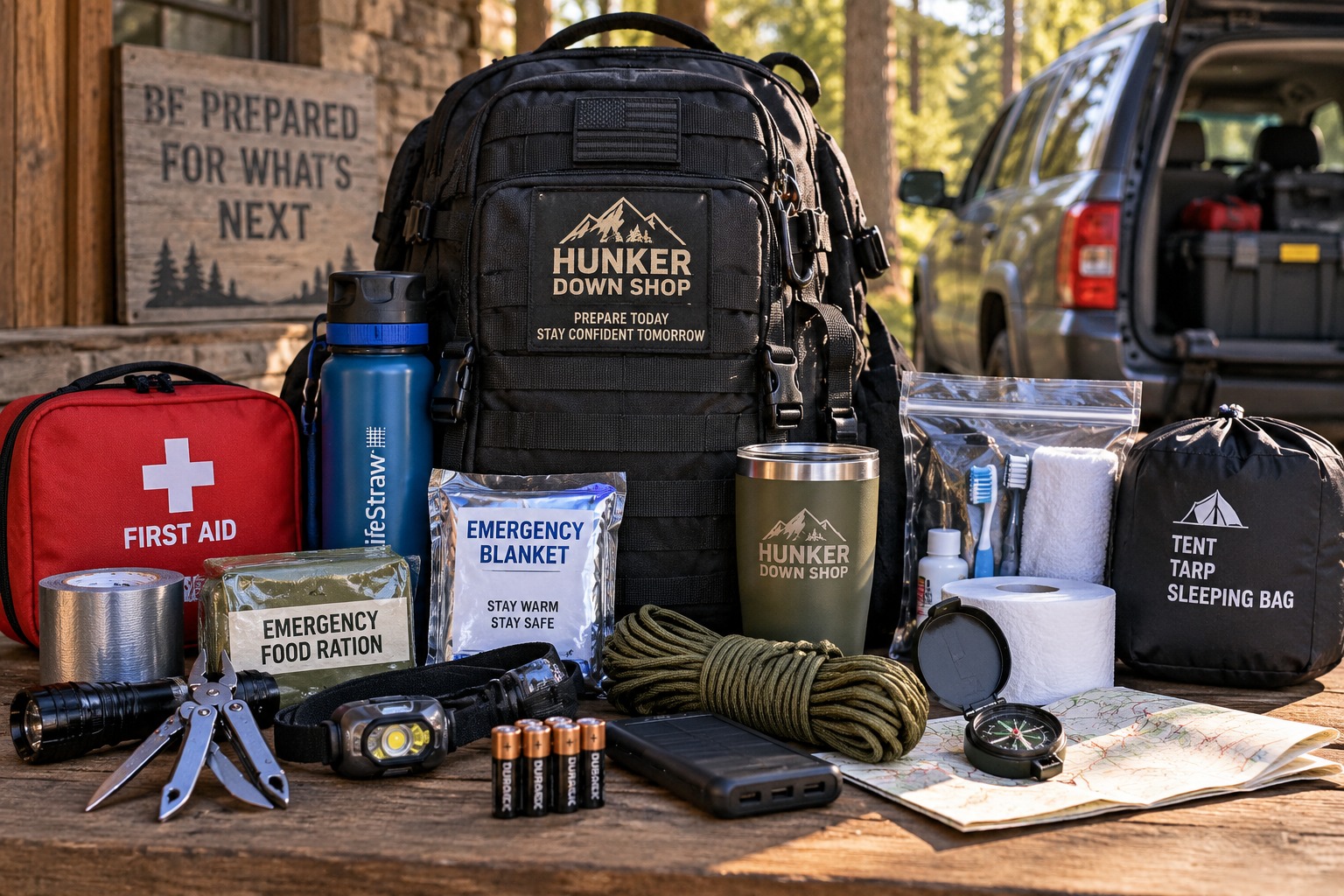
A lightweight emergency blanket, compact sleeping bag, tarp, or small tent can provide shelter and protection from the weather.
Pack an extra change of clothes, warm socks, sturdy gloves, and a rain poncho. Adjust your clothing for the season where you live.
Keep copies of insurance policies, identification, emergency contacts, and medical information in a waterproof bag.
Don’t forget toilet paper, hand sanitizer, wet wipes, a toothbrush, toothpaste, and feminine hygiene products if needed.
Useful tools include:
No two bug-out bags should look exactly alike.
If you have young children, include diapers, formula, baby food, and comfort items. Pet owners should pack pet food, water bowls, medications, and vaccination records. Likewise, older adults may need extra medications, hearing aid batteries, or mobility aids.
Think about your family’s unique needs before you finish packing.
Store your bug-out bag somewhere you can reach quickly. Many people keep one near the front door or in a bedroom closet. Others store one in each vehicle.
You should also tell every family member where the bags are located. During an emergency, everyone should know exactly what to grab.
A bug-out bag is not something you pack once and forget.
Instead, inspect it every six months. Replace expired food, rotate stored water, check flashlight batteries, update medications, and make sure clothing still fits growing children.
Regular inspections keep your emergency kit ready when you need it most.
Only you can answer that question. However, emergencies rarely happen when it’s convenient.
Preparing today means making fewer decisions during a crisis. Instead of searching for supplies while under stress, you simply grab your bag and focus on getting your family to safety.
Even if you never use your bug-out bag, the peace of mind alone may be worth the effort.
A bug-out bag is one of the simplest emergency preparedness projects you can complete. It does not have to be expensive, and you don’t need to buy everything at once.
Start with the basics. Then add items over time until your bag meets your family’s needs.
When an emergency happens, preparation can make all the difference. Having a bug-out bag ready means you can leave quickly, stay safer, and concentrate on what matters most—protecting the people you love.