
Emergencies can happen without warning.
A storm can knock out power. Flooding can close roads. Winter weather can keep people inside for days. Even a short outage can become stressful when stores are crowded and supplies are hard to find.
For seniors, these situations can be even more challenging.
Daily routines may change. Getting medicine, staying warm, and reaching family members may become harder.
However, a little planning can make a big difference.
Being ready does not mean worrying every day. Instead, it means having the right supplies before you need them.
A simple plan can help seniors stay safe, comfortable, and more independent when problems happen.
Being prepared is about more than storing supplies.
It helps families stay calm, make smart choices, and handle difficult moments with confidence.
Here are ten reasons why planning ahead matters.
Safety is the biggest reason to prepare.
During a storm or outage, people can become confused quickly. A simple plan helps everyone know what to do.
When supplies and important information are ready, families can respond faster and with less stress.
For example, knowing where the flashlights, medications, and phone numbers are stored can save time.
Emergencies are stressful enough.
However, not knowing what to do can make things harder.
When you have food, water, lights, and medical supplies ready, you can focus on taking care of yourself and your family.
Being prepared helps you feel more in control.
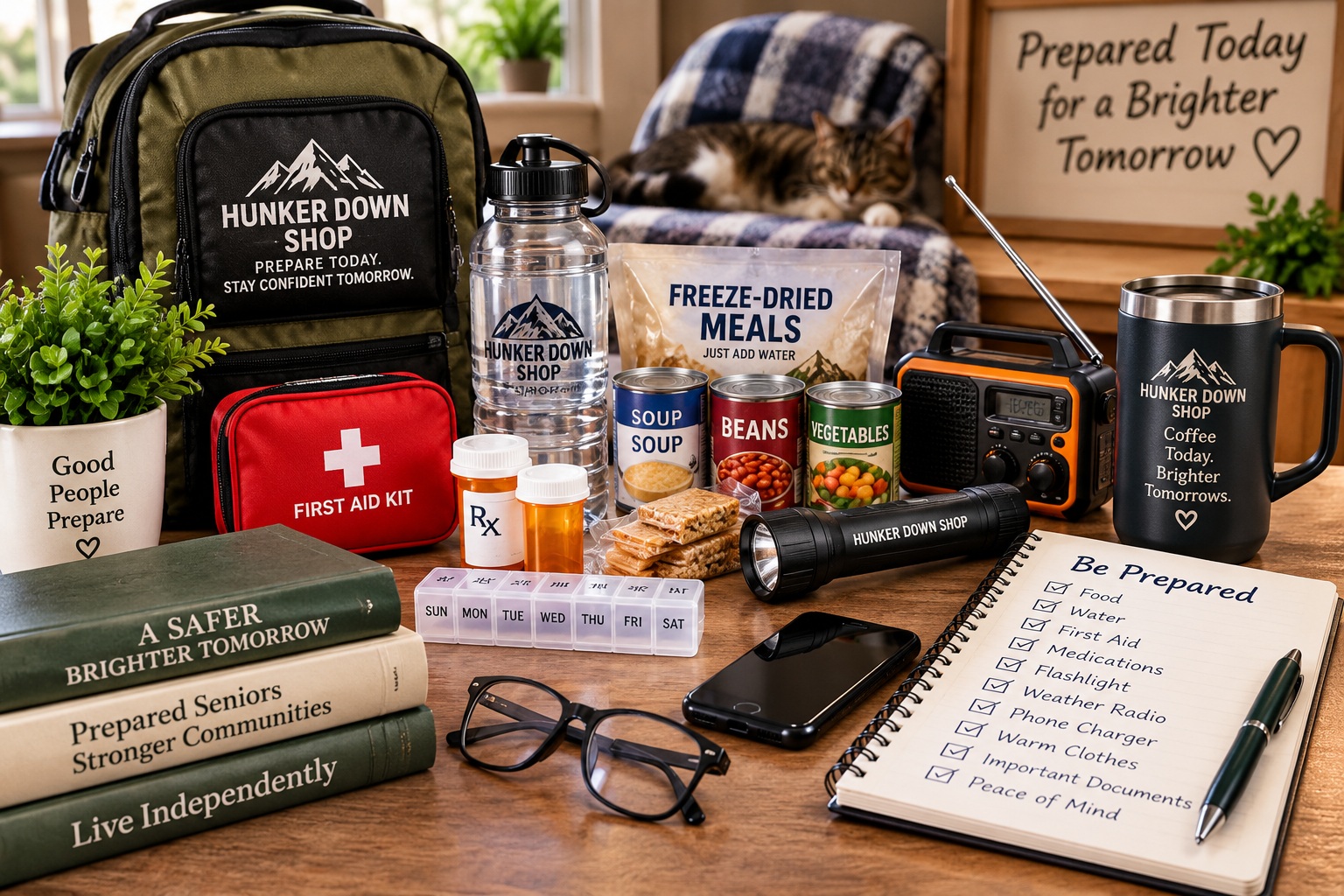
Power outages are common during storms and severe weather.
Without electricity, simple tasks become harder. Lights may not work. Phones may lose power. Heating and cooling systems may stop.
Because of this, seniors should keep a few basic supplies nearby.
Helpful items include:
These supplies can make a short outage much easier to handle.
Many people wait until bad weather is coming before buying supplies.
Unfortunately, that is often when prices go up and stores run low on products.
Instead, build your supply kit slowly.
Buy a few items when you can. Over time, those small purchases can create a useful kit without a large expense.
During a storm or other problem, everyday items may be harder to find.
Stores may close. Roads may become unsafe. Deliveries may be delayed.
That is why keeping supplies at home is so helpful.
Important items include:
When you prepare early, you do not have to rush to the store later.
Staying in touch is very important for seniors.
A phone helps you contact family, caregivers, and emergency services.
However, phones are not always reliable during severe weather.
For that reason, create a backup plan.
Keep:
Also, write important numbers on paper.
That way, you still have access to them if your phone stops working.
Being prepared can help seniors handle problems on their own for longer.
Having food, water, lights, and medicine ready means you may not need immediate help for every situation.
At the same time, a good plan lets family members know when help is needed.
Preparation is not only about people.
It can also help protect your home and belongings.
For example, smoke alarms, fire extinguishers, and safe storage for important papers can reduce risks.
A few simple steps today can prevent bigger problems later.
Prepared people are often able to help others.
When your own needs are covered, you may have more ability to help neighbors, friends, or family.
Strong communities are built when people help each other.
One of the best parts of being prepared is feeling confident.
You cannot control when problems happen.
However, you can control how ready you are.
Having a plan and basic supplies allows you to worry less and focus on what matters most.
Every home should have basic supplies ready.
However, seniors may need a few extra items for comfort, safety, and daily needs.
The best supply kit is one that fits your lifestyle and your health needs.
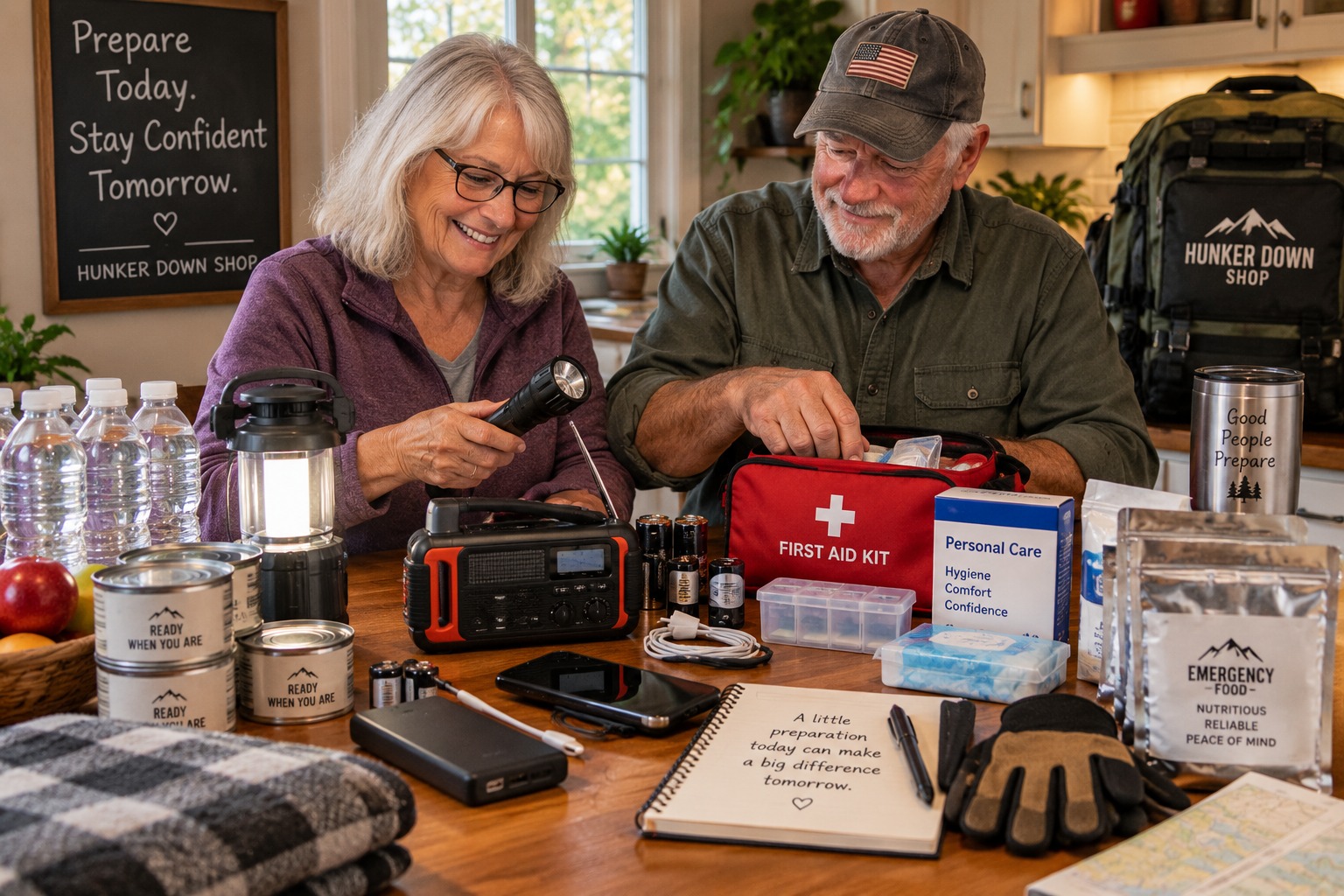
Reliable lighting is one of the first things seniors should have.
When the power goes out, dark rooms can increase the risk of falls.
For this reason, keep lights in easy-to-reach places.
Good locations include:
Helpful choices include:
A simple flashlight can provide safety and comfort during an outage.
Severe weather can affect phones and internet service.
Because of this, a weather radio is a useful tool.
A weather radio can provide updates when other services are not working.
Many models include:
A radio can help seniors stay informed during storms and power outages.
Phones are important safety tools.
They help seniors contact family members, caregivers, and emergency services.
They also provide access to weather updates and important information.
However, phone batteries do not last forever.
A power bank can help keep your phone working when the power is out.
Remember to:
A small backup battery can make a big difference.
Food preparation may become harder during an outage.
For example, cooking appliances may not work. Bad weather may also make trips to the store unsafe.
Because of this, keep simple foods available.
Good choices include:
Choose foods you enjoy and can easily prepare.
The best food supply is one your family will actually use.
Water is one of the most important things to keep at home.
Storms and other problems can affect water service.
For that reason, store clean drinking water before you need it.
Water may be needed for:
Having water ready can make difficult situations much easier.
Every home should have a first aid kit.
During a storm or outage, small injuries can become bigger problems.
For example, someone may fall in the dark or get hurt while cleaning up.
A basic kit should include:
Check your supplies often.
Replace old items and refill anything you have used.
Medicine planning is very important for seniors.
A storm, outage, or travel problem can make normal routines harder.
Keep important information together.
This may include:
Also, make sure a trusted person knows where this information is kept.
A simple plan can prevent confusion later.
Weather can change quickly during a problem.
Winter outages may leave homes without heat. Summer outages may leave homes without air conditioning.
Because of this, keep comfort items nearby.
Helpful supplies include:
These items can help seniors stay comfortable while waiting for help or restored power.
Safety becomes even more important during difficult situations.
Dark rooms and clutter can increase the chance of falls.
Consider keeping:
Also, keep paths clear throughout the home.
Small changes can make a home safer.
Finally, keep all important supplies together.
A senior supply kit may include:
Store the kit somewhere easy to reach.
Also, make sure family members or caregivers know where it is.
That way, everyone can find what they need quickly.
Supplies are important.
However, having a simple plan is just as helpful.
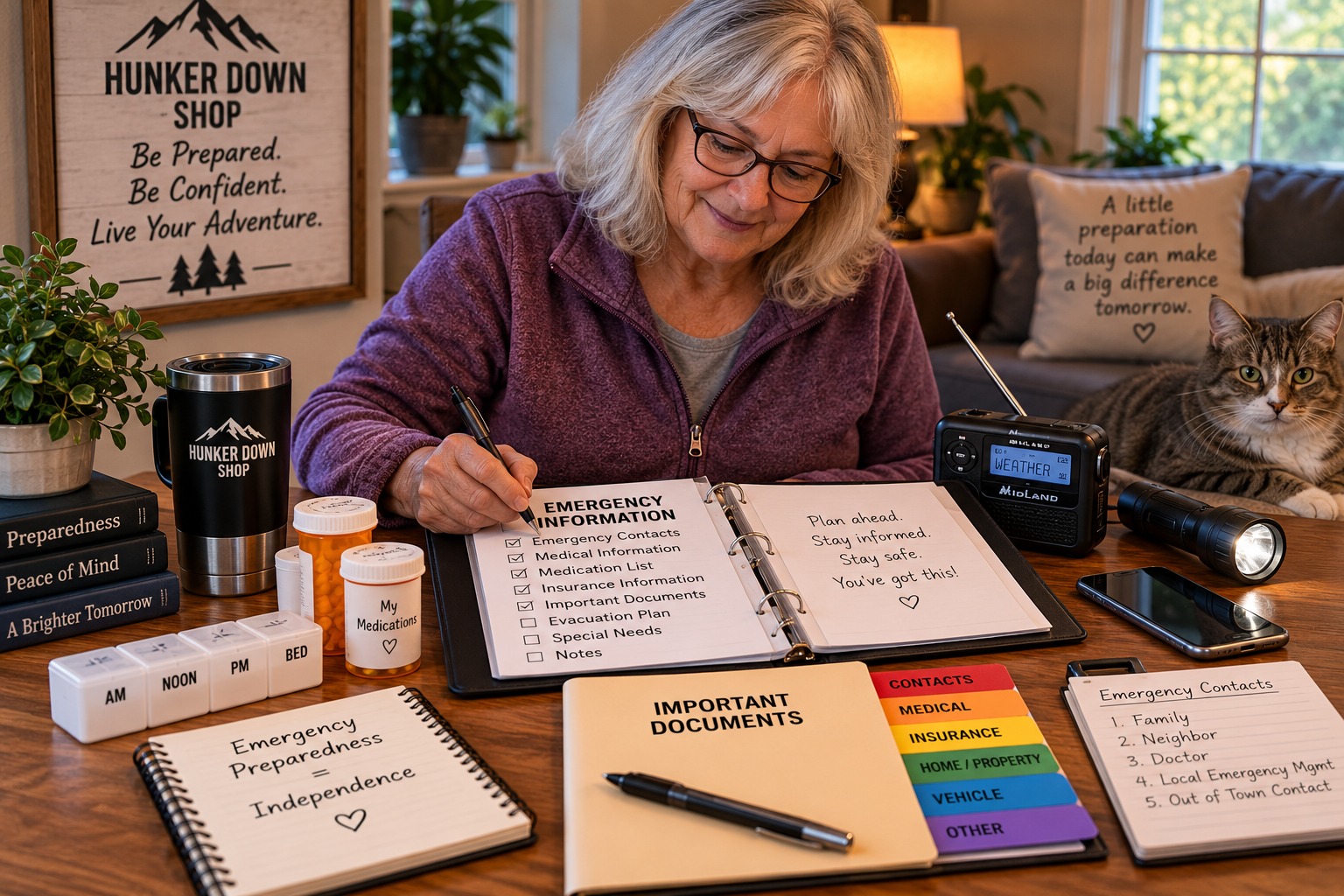
Keep a current list of:
Store copies in a safe place.
Make sure someone you trust knows where to find them.
Decide who you will contact during an emergency.
Choose a family member or friend who can help if needed.
Also, pick a backup contact outside your area.
A simple communication plan can prevent confusion.
Every senior is different.
Some people may need extra supplies, such as:
Think about your own needs before an emergency happens.
The best supplies are the ones you already have when you need them.
Getting ready does not have to happen all at once.
Start with the basics. Then add more items as your budget allows.
Over time, you can build a supply kit that helps you feel safer and more confident.
At Hunker Down Shop, we believe being ready should be simple, practical, and affordable.
That is why we provide supplies to help families prepare for storms, outages, and other unexpected events.
A little planning today can make tomorrow easier.
Prepare today. Stay ready. Hunker Down with confiden